



How to Hire a Live Wedding Painter: A Complete Guide
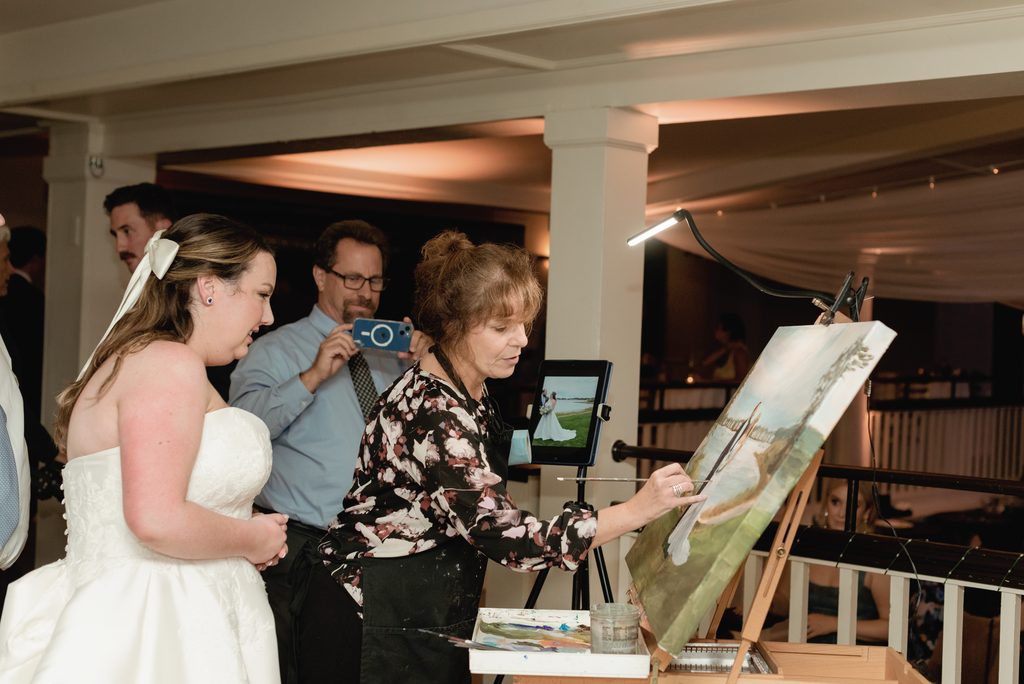
A live wedding painter creates an original painting at your wedding, capturing a chosen moment as your celebration unfolds. Your guests can watch the work take shape, and afterward you have a painting made specifically for you and your wedding day. You can learn more about my live wedding painting process.
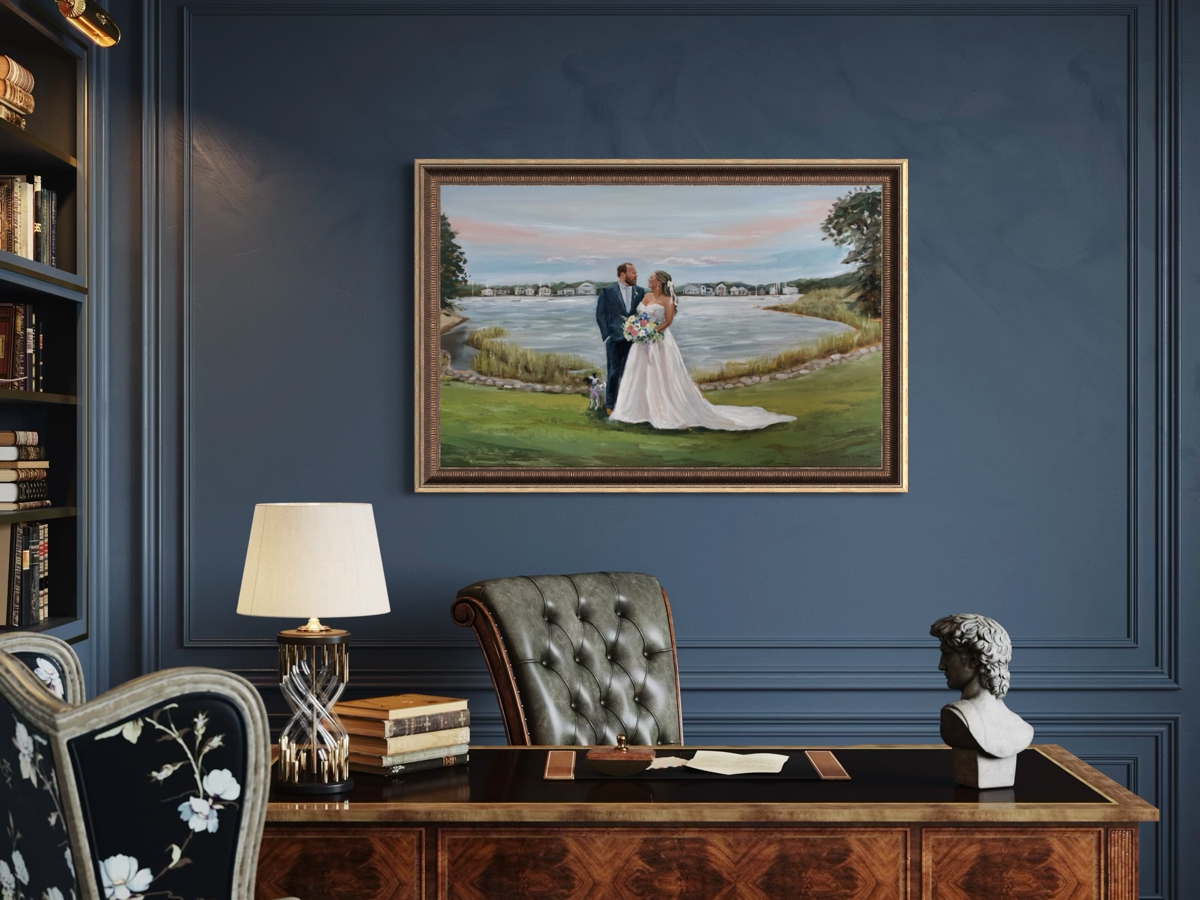
The experience is memorable, but the painting itself is what stays with you. It can become a family heirloom: a personal work of art that brings you back to a moment, a place, and the feeling of being there.
I’ve created more than 350 commissioned works of art, including live wedding paintings. Here’s what I recommend considering as you look for the right artist.
Start With the Artist’s Portfolio
Choose an artist whose style you already love
Every artist has a distinct way of seeing and painting. When you review a portfolio, look for work that resonates with you as it is. Asking an artist to work in a completely different style from their own usually doesn’t lead to the best result. You’re choosing the artist’s eye, brushwork, and way of telling a story.
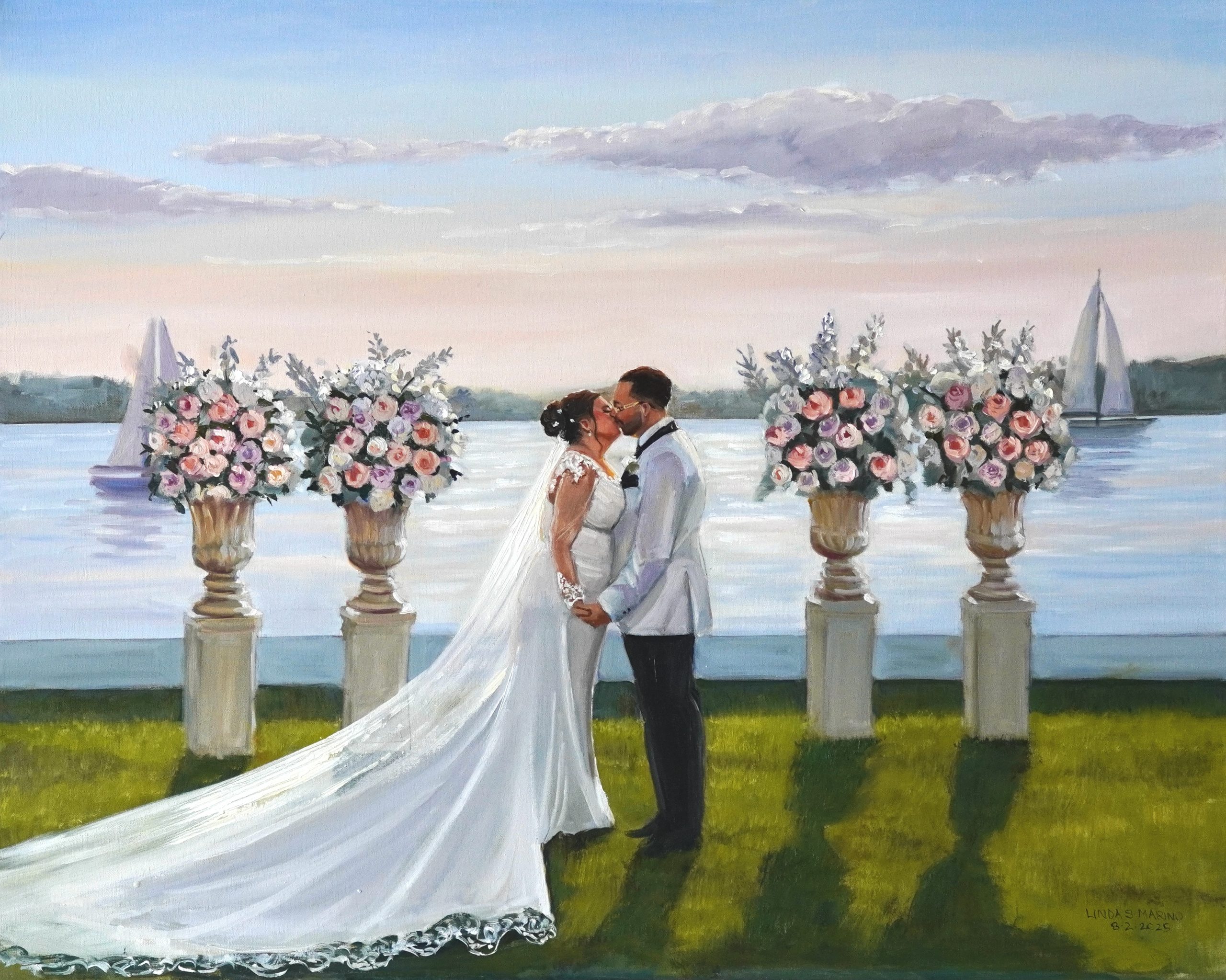
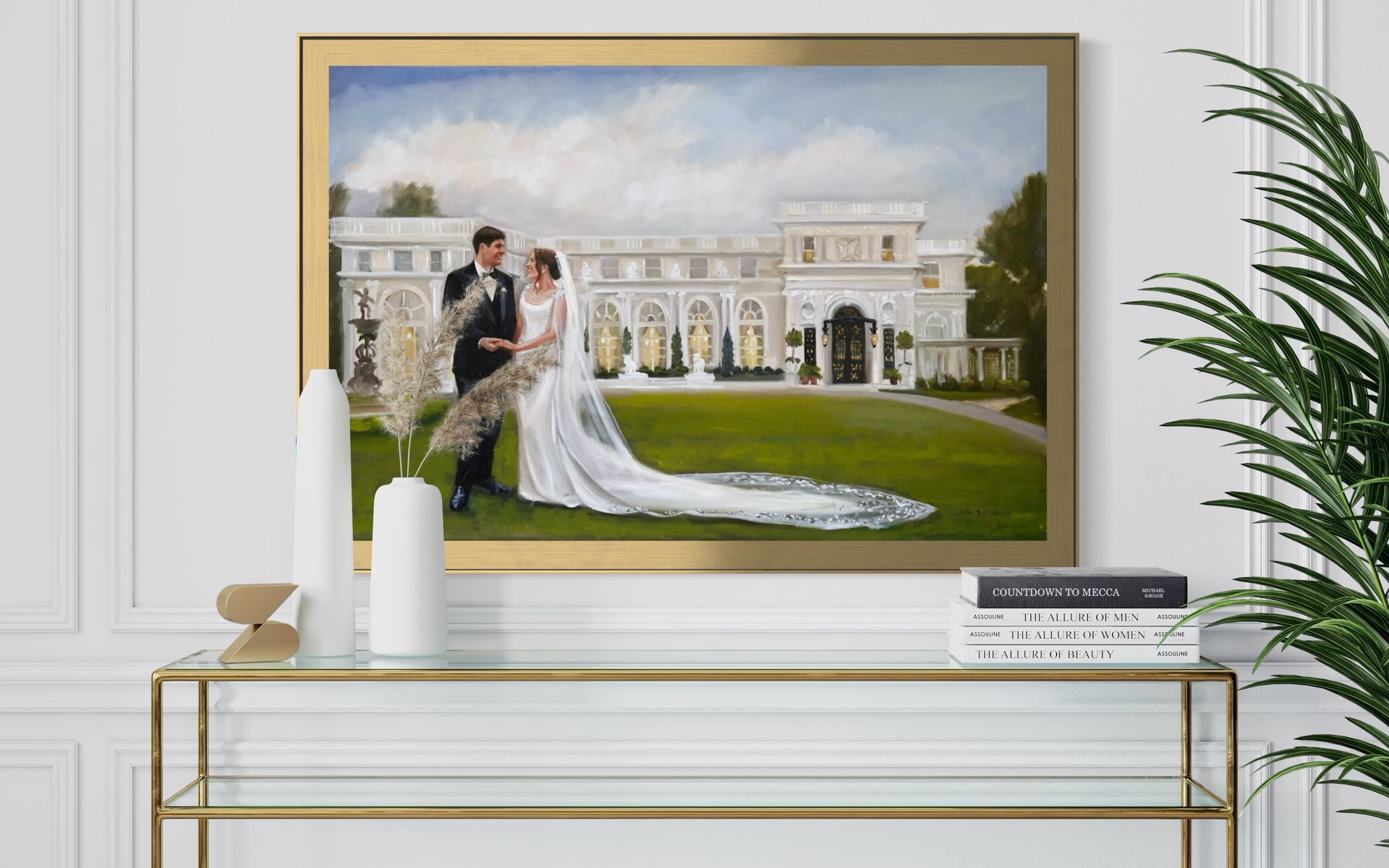
Look at examples of the kind of scene you’re considering. For instance, you can compare intimate wedding painting moments with celebration scenes that include guests. Do you like how the artist handles people, clothing, architecture, landscapes, and light? Does the work feel consistent from painting to painting?
Look closely at the quality
A wedding painting may be created in front of your guests, but it is also a commissioned work of art you may display in your home for generations. Consider whether the figures feel believable, whether the composition holds together, and whether the painting has a sense of place and atmosphere.
Live painting combines several challenging skills: portraiture, figure painting, landscape, perspective, composition, and the ability to work from life under changing conditions. A few attractive photographs of one type of scene may not show how an artist handles a crowded reception room, a ceremony landscape, or a changing moment.
Look for experience across different situations
Painting in a studio means working in a controlled environment. Painting at a wedding means responding to the venue, timeline, weather, lighting, and movement of the day. Experience helps an artist make decisions when those conditions change.
Review examples that show a range of scenes and venues. Ask how long the artist has been painting live at weddings and how they handle unexpected changes.
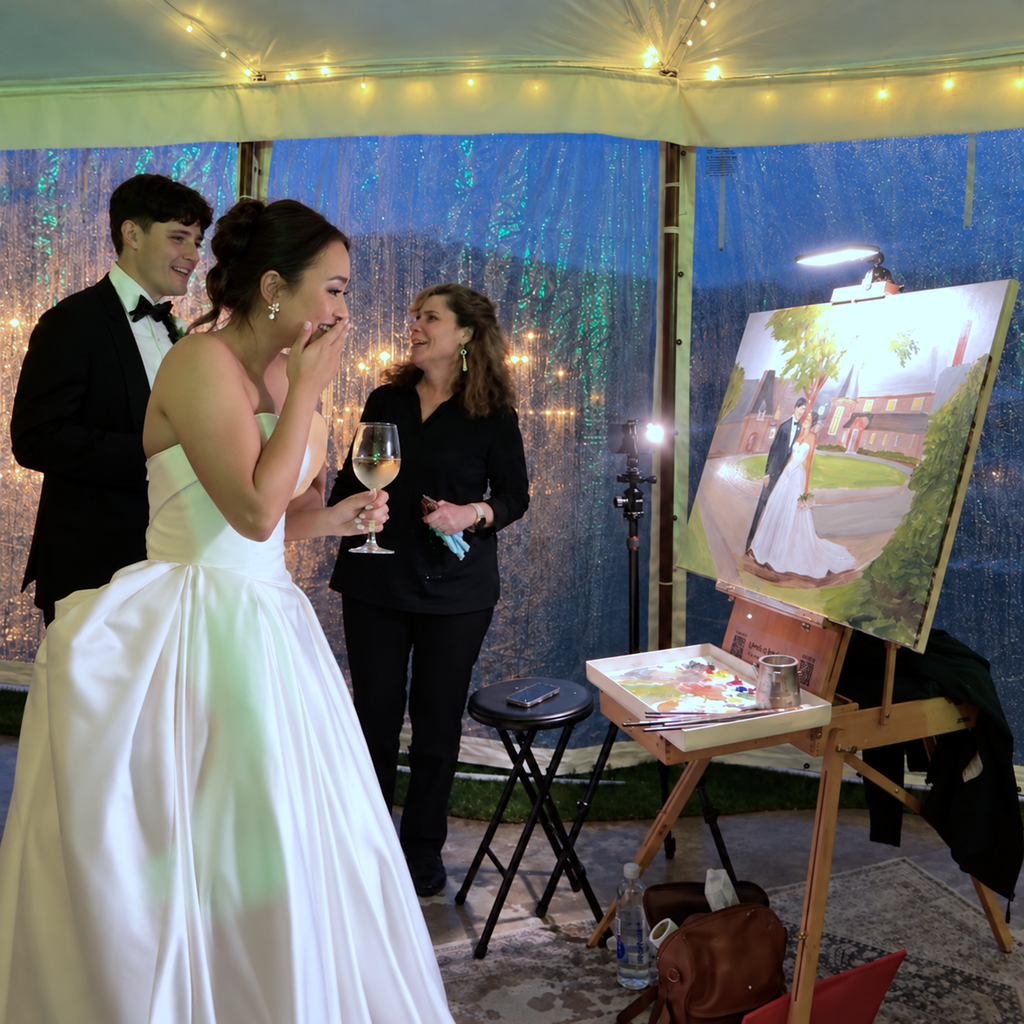
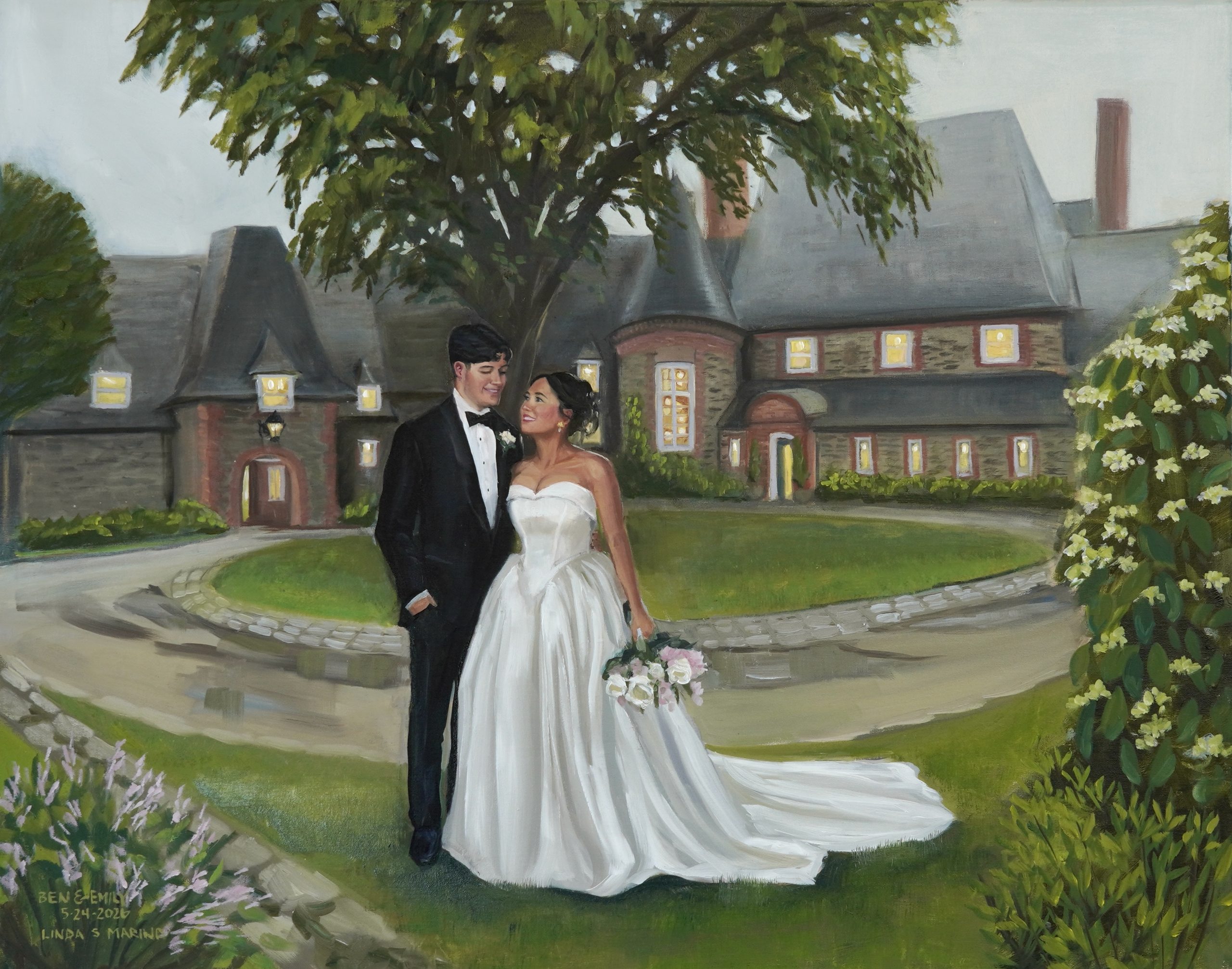
Blog: Rain may not have been part of the original plan, but sometimes a change in plans creates its own kind of magic….
Have a Conversation Before You Book
Talk through the artist’s process
A personal conversation helps you understand how the artist works and gives you a chance to share what matters to you. The artist should listen carefully, ask thoughtful questions, and explain how they’ll help develop your idea.
You might ask:
- What parts of the wedding day do you usually paint?
- How do you prepare before the event?
- How much painting is completed on site, and what happens afterward?
- How do you work with the planner, venue, and photographer?
- What happens if the weather, lighting, or timeline changes?
Notice whether the artist can explain their process clearly and whether you feel heard. A strong working relationship begins with clear communication and trust.
Ask to see a range of finished paintings
Ask to see completed paintings, not only photographs of work in progress from the wedding day. The finished piece shows how the artist brings together the scene, figures, setting, and details after returning to the studio.
It’s also helpful to see more than one type of painting. You want to understand how the artist handles the kind of composition you’re considering.
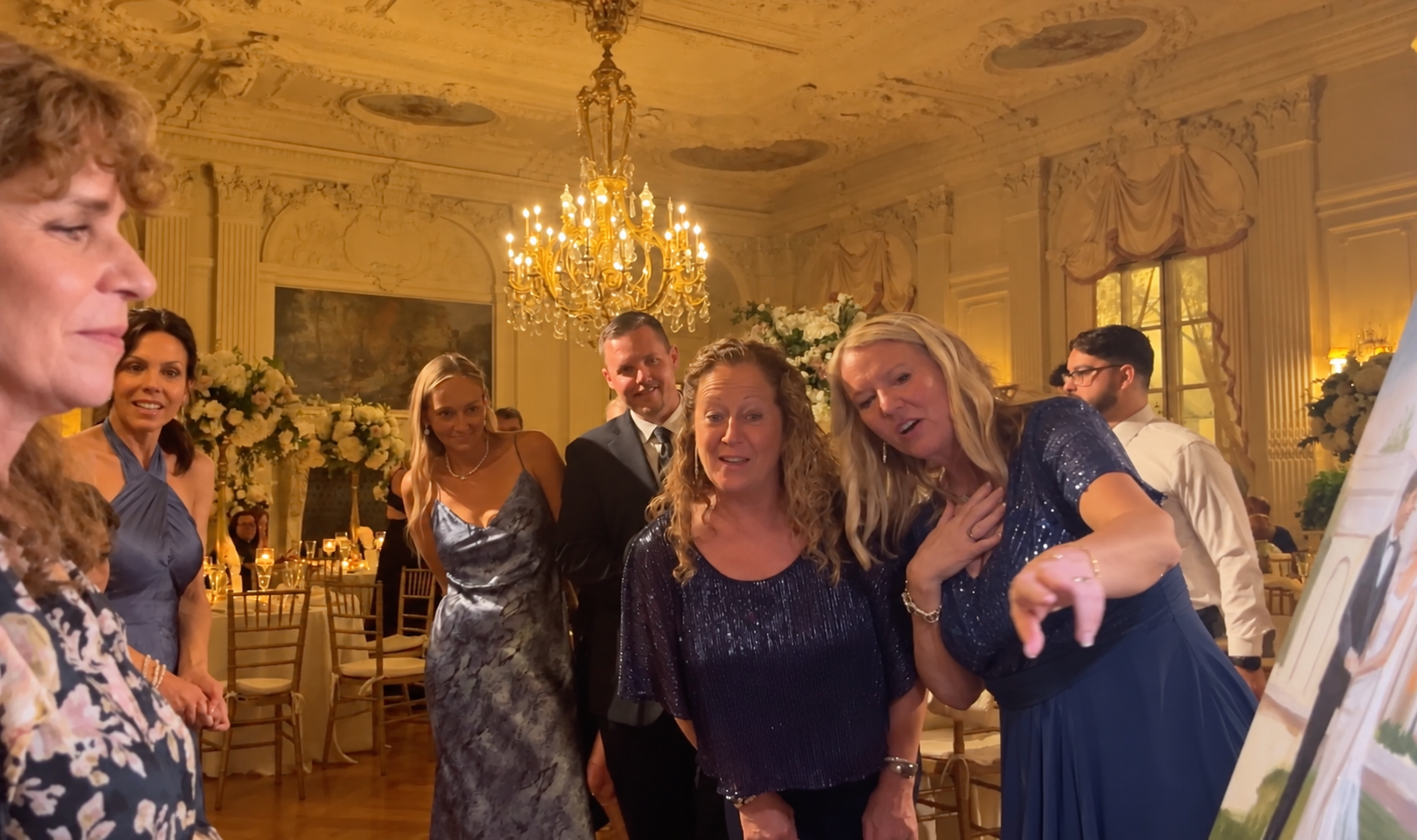
Choose a Scene That Means Something to You
Begin with the memory you want to keep
The right scene is personal. It might be your ceremony, your first dance, a quiet moment together, or the landscape of the place where you were married. Ask yourselves: Which moment would we most want to remember years from now?
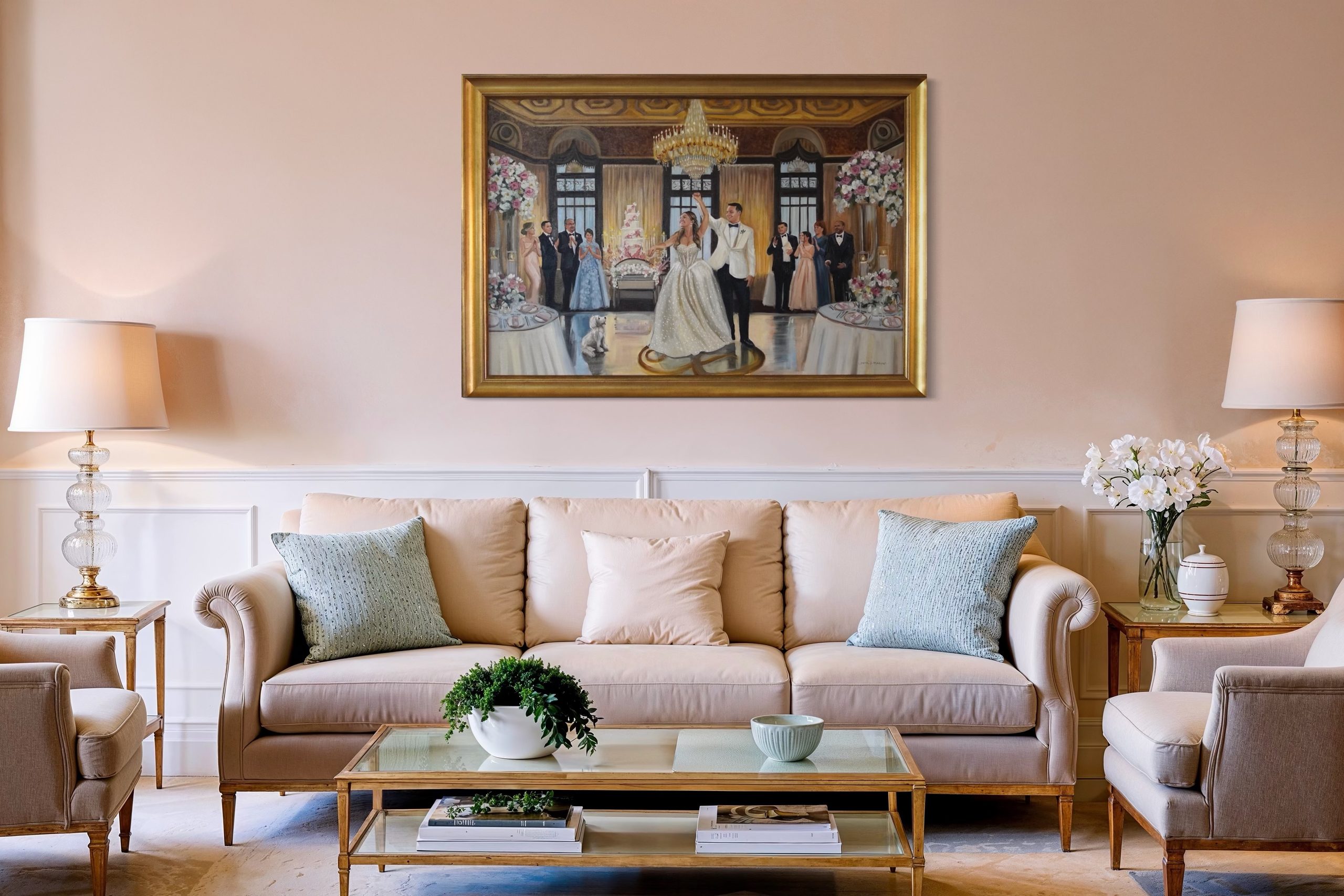
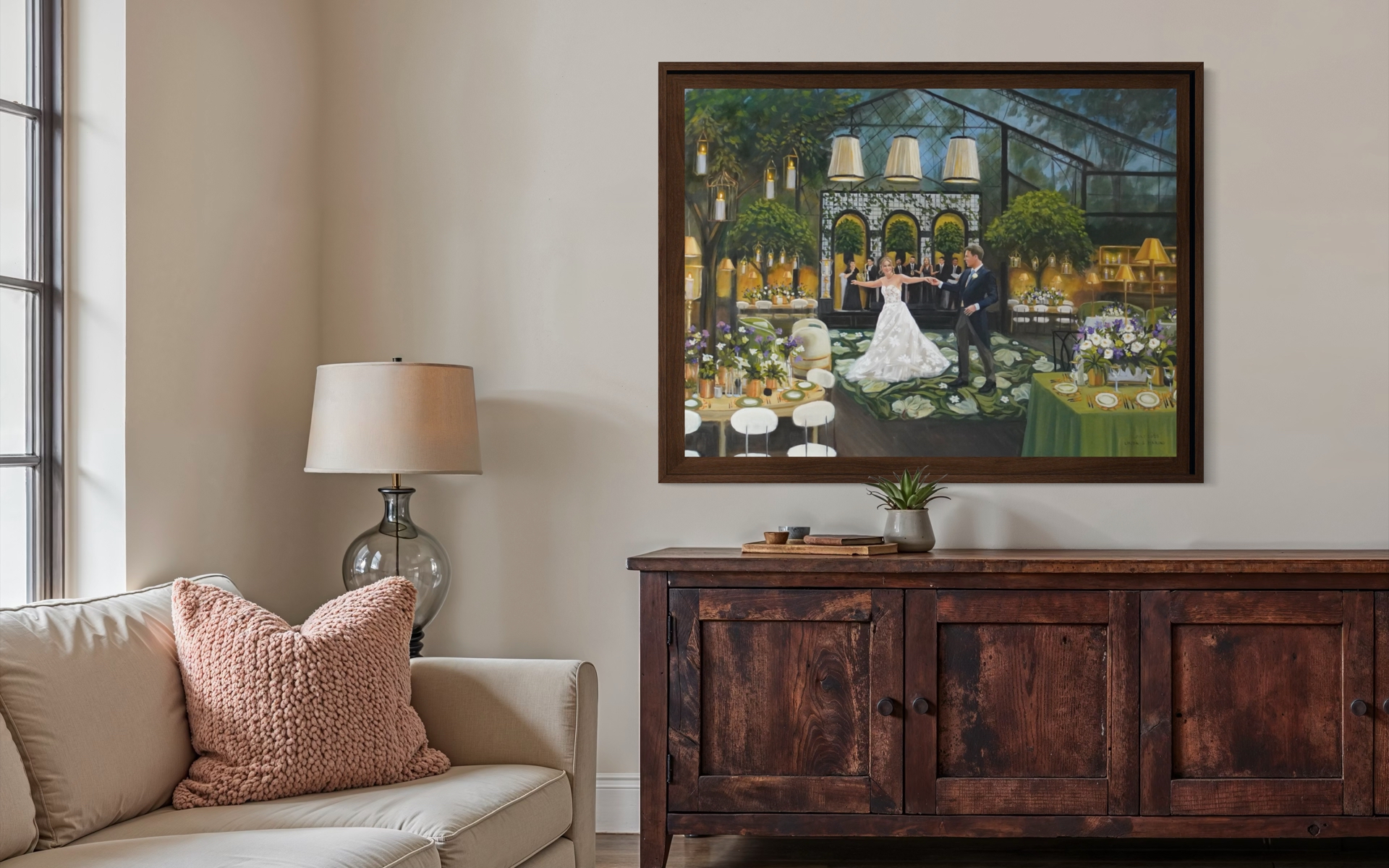
One couple I worked with initially thought they wanted their ceremony painted. As their plans developed, they put more thought into their reception space and practiced their first dance. They realized that the dance had become the moment they most wanted to preserve, so they changed their scene. That kind of decision is part of the process. You don’t need to settle on an idea before you’ve had a conversation with the artist.
Think about the people and details you want included
You may want the painting to include family members, guests, a beloved pet, or a family member who has passed away. Some pets attend the wedding; others can be included from photographs. If there are people or details that carry special meaning, bring them up early so the artist can discuss how they might fit into the composition.
The goal isn’t to include everything. It’s to decide which details will make the painting feel like your story.
Consider the composition as well as the setting
A beautiful venue can be an important part of the painting, but the artist also needs to keep you prominent in the scene. Sometimes the requested view needs to be adjusted to balance the people and the setting.
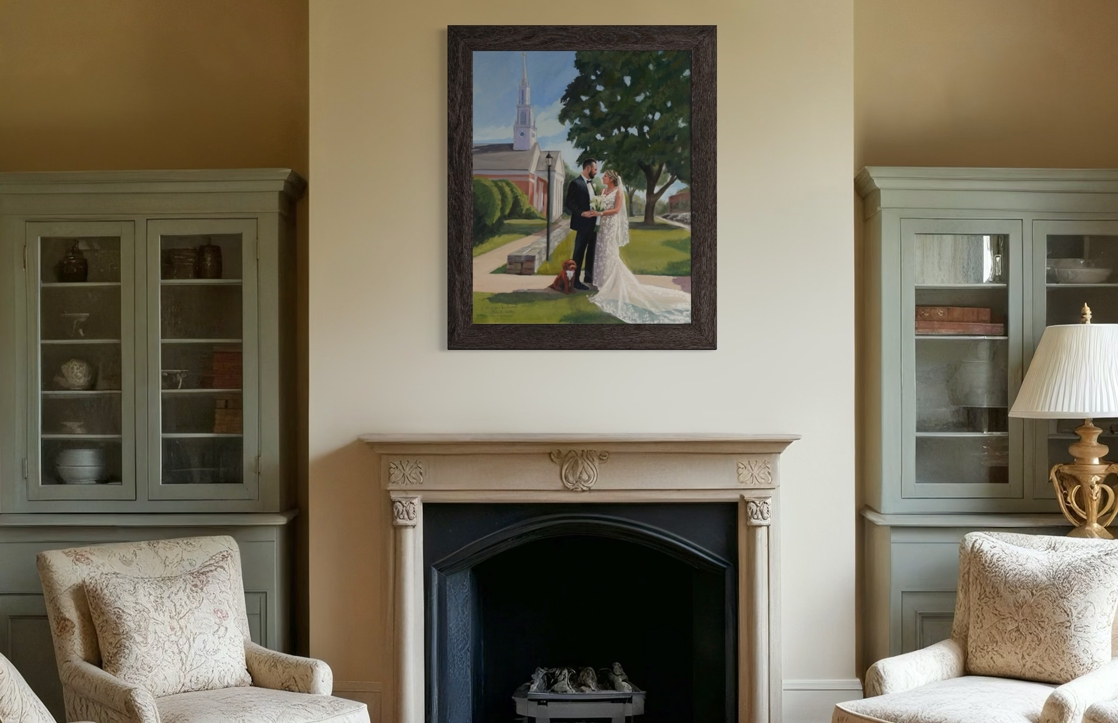
For example, one couple wanted to appear on the steps of a church with the entire church and steeple visible. From that viewpoint, including the whole building would have made the couple too small to read clearly as the focus of the painting. I suggested sketches that placed them farther away, with the church behind them, so the steeple could remain in the composition while the couple still felt central. We found an arrangement that worked for both goals.
Ask for sketches or reference examples
After I speak with a couple, I often include four or five examples in a custom proposal to help clarify the possibilities we discussed. And after my clients book my services, I often provide sketches when they’ll help us agree on the composition before the wedding.
This preparation gives us a shared vision. It’s especially useful when the scene is complex or when the couple is deciding between several ideas.
Understand What Happens on the Wedding Day
Expect a painting in progress
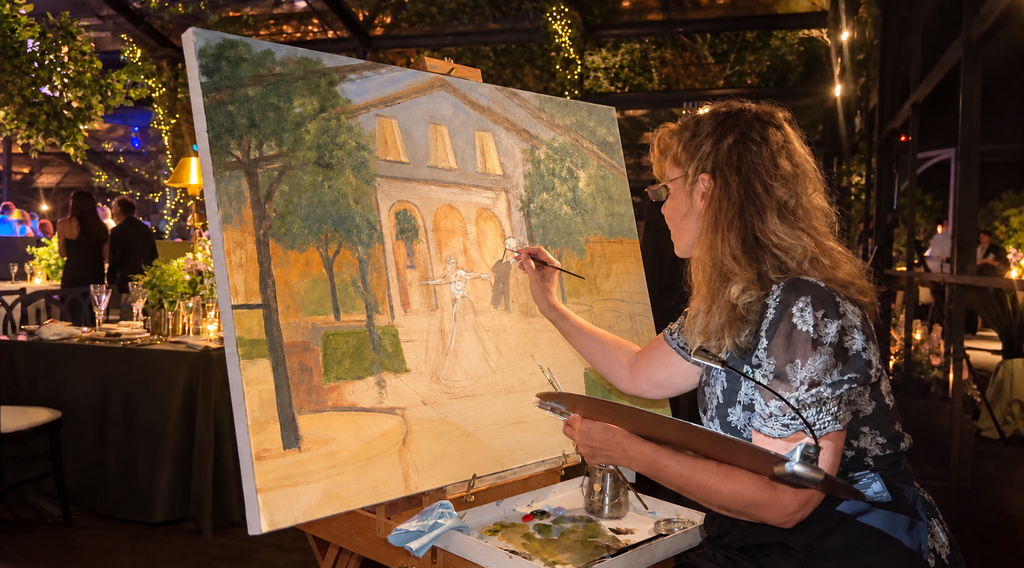
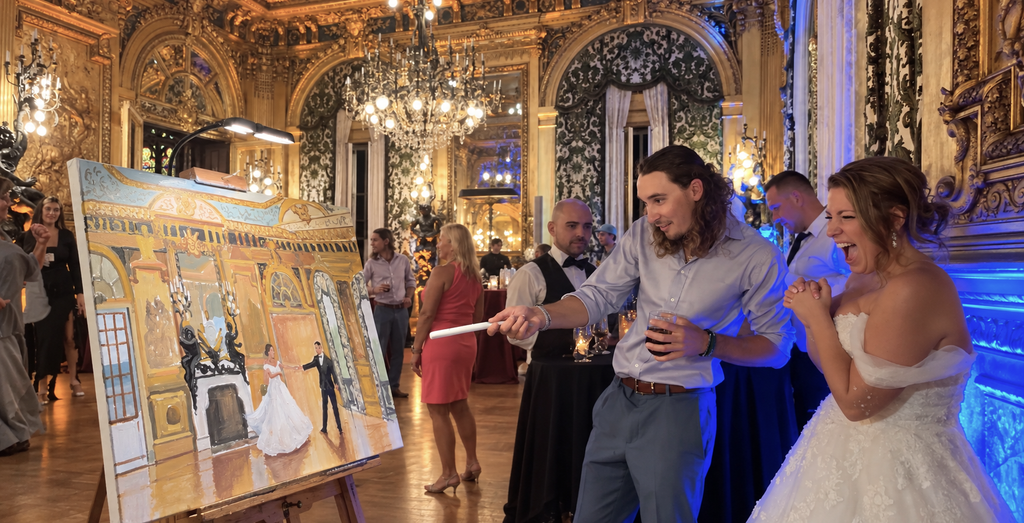
A live wedding painting is created within the time and conditions available at the event. The artist may paint for several hours, but guests will see a work in progress—not necessarily a finished, varnished painting ready to hang that night.
In my experience, the reception environment can make it difficult to judge colors accurately. Dramatic lights may shift the way colors appear on the canvas, and the lighting crew may ask the artist to dim an easel light. I’ve also had to paint with my back to a scene, turning around to study it and then working from memory.
These conditions are part of painting live. They are also why it matters to know what the artist’s post-wedding process includes.
Ask whether the artist refines the painting in the studio
For most artists, returning to the studio is an essential part of completing the painting. Studio refinement gives the artist time to evaluate the work in natural light, make corrections, and give the details the attention they need.
Only a small number of artists may be able to finish a painting to a high standard that same evening. Ask what “finished” means in the artist’s process and whether the painting you see at the end of the night is the final piece or an early stage of it. I believe couples should receive the strongest finished work the artist can offer, even if that means the painting is refined after the wedding.
Prepare Your Venue Team and Timeline
Tell your planner and venue
Let your planner and venue know that you’ve hired a live painter. They can help identify a suitable place to set up and coordinate the artist’s needs with the event schedule.
Share the wedding timeline with the artist, including when the moment you want painted is expected to happen. The artist needs to plan when to arrive, where to work, and how to approach the composition.
Coordinate with your photographer
Tell your photographer that a painter will be working at the wedding. Both are documenting the day in different ways, and advance communication helps everyone work together comfortably.
The painter may also need reference photographs, particularly for details or people who won’t be present during the painting.
Plan for moments that happen late
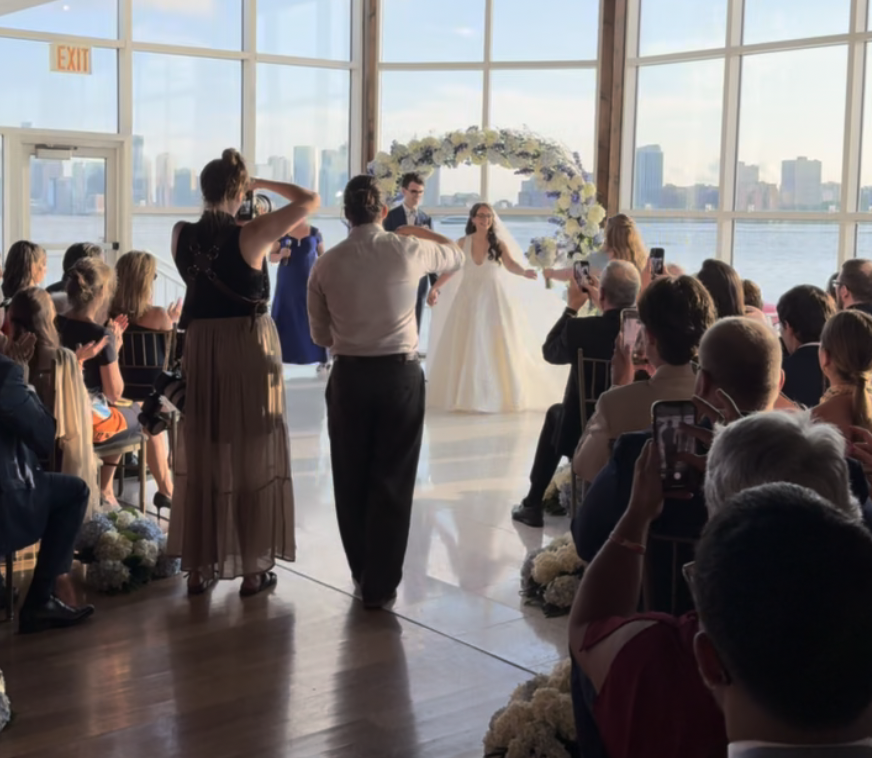
The timing of the chosen scene matters. I once had a couple whose first dance was scheduled for 10:30 p.m. That’s very late to begin the central part of a painting. For a planned pose, I may ask the couple to practice beforehand and briefly hold a position so I can study it. That allows me to capture the gesture without putting too much pressure on a late-night moment.
Discuss the timeline with the painter early, especially if you’re choosing a first dance, ceremony exit, or another moment that may happen late or move around.
Plan for Weather and Other Changes
Outdoor weddings can change quickly. At a recent Martha’s Vineyard wedding during a nor’easter, flooding under the tent and a last-minute move from an outdoor ceremony to an indoor one affected the plans. Weather is only one possibility. Lighting, room layout, placement, and schedule changes can all affect what the artist is able to see and paint.
Ask how the artist responds if the original plan changes. A skilled live painter will need to adapt to the conditions on site and make decisions about what can be captured there and what can be refined afterward. A clear process helps you feel confident that unexpected circumstances won’t leave you without a considered finished painting.
Understand the Investment and Delivery
Think of it as commissioned art
The price reflects more than the hours guests see the artist painting. The work may include pre-wedding conversations and planning, sketches, preparation from photographs, travel, hours on site, and substantial studio refinement afterward. Depending on the scene, I may spend anywhere from 18 to 60 hours refining a painting after the wedding.
A live wedding painting is also a unique commissioned work. A photograph can record a moment, but it cannot recreate the same painting experience or the artist’s interpretation of the day. The live process adds an experience for you and your guests; the lasting value is the original artwork you take home.
I’ve had couples tell me years later how meaningful their painting has become to them. For many, its importance grows as it becomes part of their home and family history.
Ask what is included and when you’ll receive the painting
Before booking, make sure you understand what the fee covers, whether travel is included, what happens after the event, and how the finished painting will be delivered. Ask the artist for an estimated completion timeline. The exact schedule can depend on the season and the artist’s studio calendar, so it’s helpful to discuss this directly.
When to Book a Live Wedding Painter
Many couples inquire six to twelve months ahead, and popular dates can book early. If live painting is important to you, reach out once you know your date and venue. Even if your exact scene is still undecided, an early conversation gives you time to explore ideas and plan with your artist.
The Right Artist Helps You Remember the Day Your Way
Hiring a live wedding painter is a collaboration. Look for an artist whose work you love, whose experience gives you confidence, and who takes the time to understand what you want to remember. Share your ideas, ask questions, and give the artist a chance to offer guidance.
A live wedding painting is a commissioned work of art that carries both the memory of your day and the artist’s care in creating it. You can learn more about my artwork and approach or read what winning a business award taught me about becoming a professional artist.
With thoughtful preparation and open communication, the painting can become more than a record of your wedding. It can be an original work of art that brings the day’s people, place, and feeling into your home for years to come.
