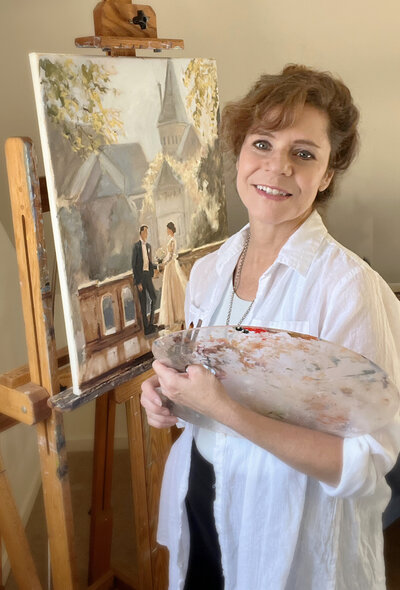




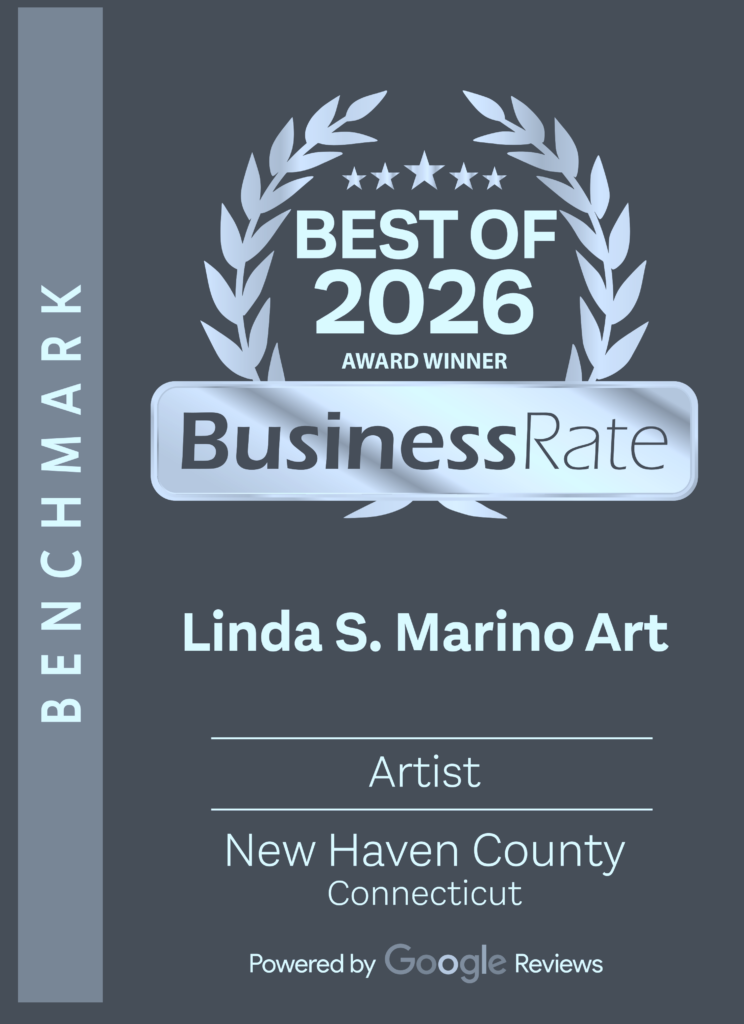
This week, I sat down in my studio to record the video above about some exciting news—I was recently named Best Artist in New Haven County, Connecticut for 2026 by BusinessRate, based on my Google reviews.
I’ve received awards for my artwork over the years, and each one has meant a great deal to me. There is something very special about having a painting recognized by a judge or fellow artists for its quality.
But this award feels different.
It isn’t only recognition of my artwork. It reflects the business I’ve built around my artwork and, most importantly, the experiences my clients have had working with me.
Recording the video made me think about just how long it took to learn both sides of becoming a professional artist.
Learning Art and Learning Business Are Two Different Things
I earned my bachelor’s degree in Business Administration with a concentration in Marketing.
That education gave me a foundation in business principles that has certainly helped me over the years. But I’ve learned that understanding business in a classroom and actually building a business are two very different things.
Most of what I know today came through decades of life experience—trying things, making mistakes, solving problems and continually learning.
Interestingly, my art education was similar.
I took art courses in college and continued studying afterward. I learned drawing, painting, color, composition and technique.
But I don’t remember anyone ever teaching me how to make a living as an artist.
How do you find customers? How do you price your work? How do you build a website? How do you turn an inquiry into a client?
And perhaps most importantly, how do you create a business that allows you to continue making art year after year?
The Article That Changed My Thinking
Around 2008, I came across an article about artists participating in what was known as the Daily Painting Movement.
Artists were creating small paintings—often under 10 inches—and selling them online.
This was before Instagram became the marketing tool we know today and before social media became such an important part of how artists share and sell their work.
Something about that article gave me courage.
For the first time, I could see a practical way that working artists were connecting directly with people who wanted to own their work.
I remember thinking, Maybe I could do this too.
I began selling small paintings through a website called Daily Paintworks, and slowly I began building.
The Years That Didn’t Look Like Success
Looking backward, there was a long stretch when my art career probably didn’t look particularly successful from the outside.
I painted plein air for years and organized several painting groups. Eventually, I served for two years as president of the Connecticut Plein Air Painters Society.
I attended weekly figure drawing sessions at an academy because I wanted to strengthen my ability to draw the human figure.
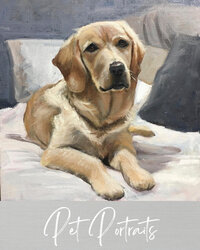
I created pet portraits for several years, which taught me something entirely different: how to create commissioned artwork.
That’s an important distinction.
When you create an original painting and offer it for sale, the painting begins with your vision.
With commissioned artwork, someone is trusting you with theirs.
You have to listen. You have to communicate. You have to understand what matters to that person and then combine their story with your own artistic judgment.
I taught paint nights and beginner painting classes. I learned web design and even helped other artists build their websites.
Each experience taught me something different.
And for many of those years, I wasn’t making much money. There were times when what I earned from my artwork barely covered the cost of my paints, canvases, frames, classes and other materials.
But I kept going, learning and building.
Then Everything Began to Weave Together
In 2019, I painted my first wedding live.
Looking back now, I can see that I didn’t suddenly become a live wedding painter that day.
All those earlier experiences had been preparing me for it.
Plein air painting taught me to work quickly on location and respond to changing light.
Figure drawing taught me to observe people.
Pet portraits and commissioned artwork taught me how to interpret someone else’s vision.
Teaching taught me how to communicate.
Marketing and web design taught me how to present my work.
Organizing groups taught me leadership.
And years of working with clients taught me how important it is to do what you say you’re going to do.
Today, each wedding painting I book involves approximately 75 individual tasks from the first inquiry through the delivery of the finished painting.
The painting itself is only one part of the job.
This Award Really Belongs to My Clients, Too
That’s ultimately why receiving a business award based on my Google reviews feels so meaningful.
Those reviews were written by my couples and their families—people who trusted me to be part of one of the most important days of their lives.
They weren’t only reviewing a painting.
They were reviewing an experience.
And perhaps that’s one of the greatest lessons I’ve learned in all these years:
Becoming a professional artist requires developing two sets of skills.
You have to continually become a better artist.
But you also have to become better at serving the people who allow you to make art for a living.
Neither happened overnight for me.
They were built slowly—painting by painting, client by client, lesson by lesson.
And I’m still learning.
But when I look back at that artist in 2008 who read an article about people selling little paintings online and thought, Maybe I could do this too, I’m very grateful she decided to try.
