




A Story in Motion: Adam & Molly’s First Dance
Adam and Molly’s live wedding painting holds a special place for me—not only because of the joy surrounding their wedding day, but because it reflects something I care deeply about as an artist: thoughtful storytelling.
Their live wedding painting was a gift from Adam’s parents, and from the very beginning, Adam and Molly were genuinely excited about the process. They didn’t just want a painting of their wedding—they wanted a moment preserved.
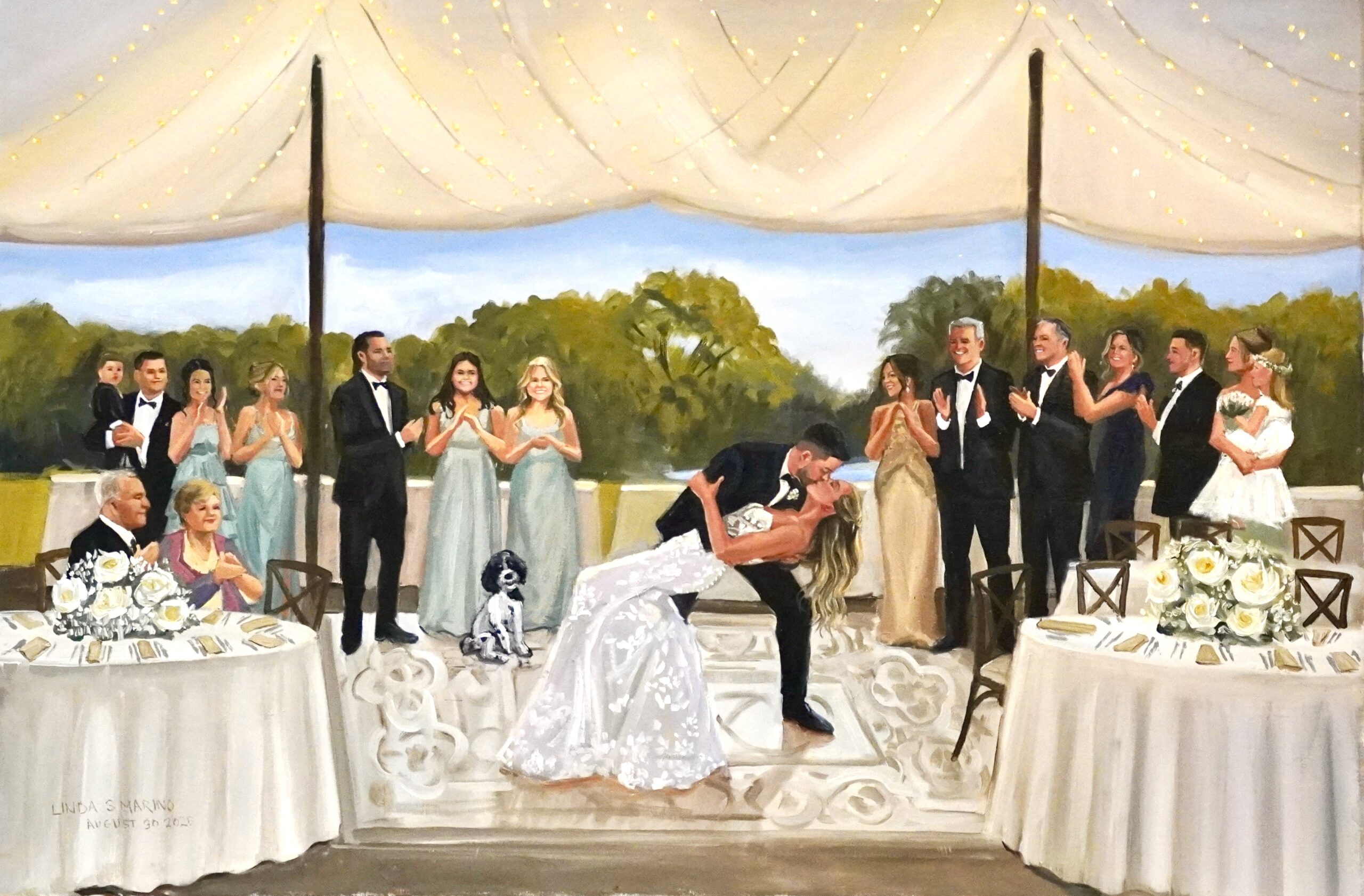
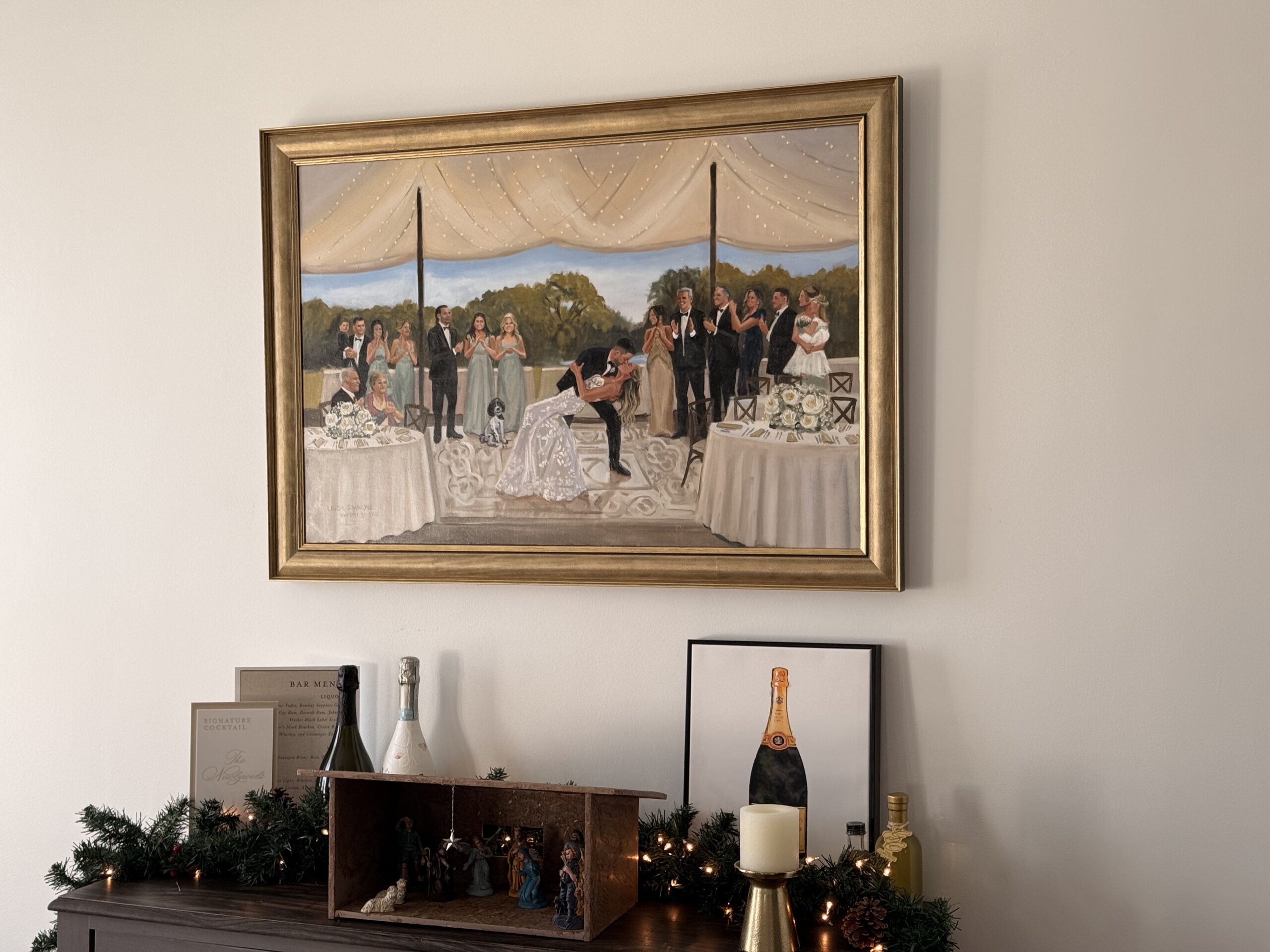
They were married last August at Shepherd’s Run, a beautiful Rhode Island venue filled with warmth and elegance. The scene they chose was their dip kiss during their first dance—a moment full of movement, trust, and celebration.
Staging the Moment with Intention
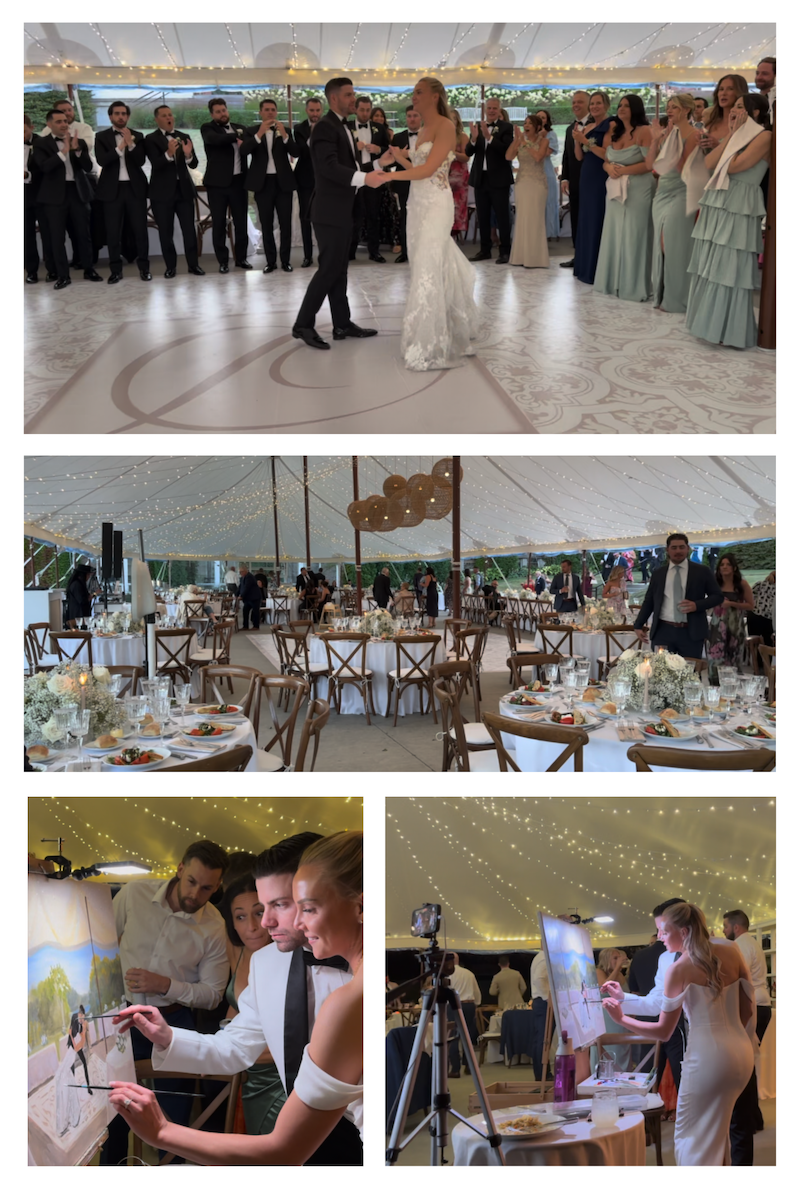
While the dip kiss happened naturally during the reception, Adam and Molly and I made a thoughtful decision ahead of time: we staged the pose earlier in the evening.
This is something I often recommend for moments like this. During a live event, the room is full of energy—guests moving, photographers shifting, lighting changing. Staging allows me to ask the couple to hold the pose just a moment longer, and it allows me to position myself where I can truly see the composition clearly.
That clarity matters. It ensures that when I return to the studio, I’m not guessing—I’m building on a strong foundation captured from life.
The Details That Make It Personal
Adam and Molly were wonderful collaborators. They shared photos of their dog, Cannoli, who they wanted included in the painting, along with family members and their wedding party. They even sent me a video of themselves practicing their first dance—they had taken dance lessons together, which made the dip feel both natural and confident.
Those details matter. They’re part of the story.
Back in my studio, I worked carefully to include 16 additional figures in the painting. I had taken photos during the event, and Adam and Molly generously supplied more reference images afterward. This is where the real composition work begins.
From Camera to Canvas: A Timeless Approach
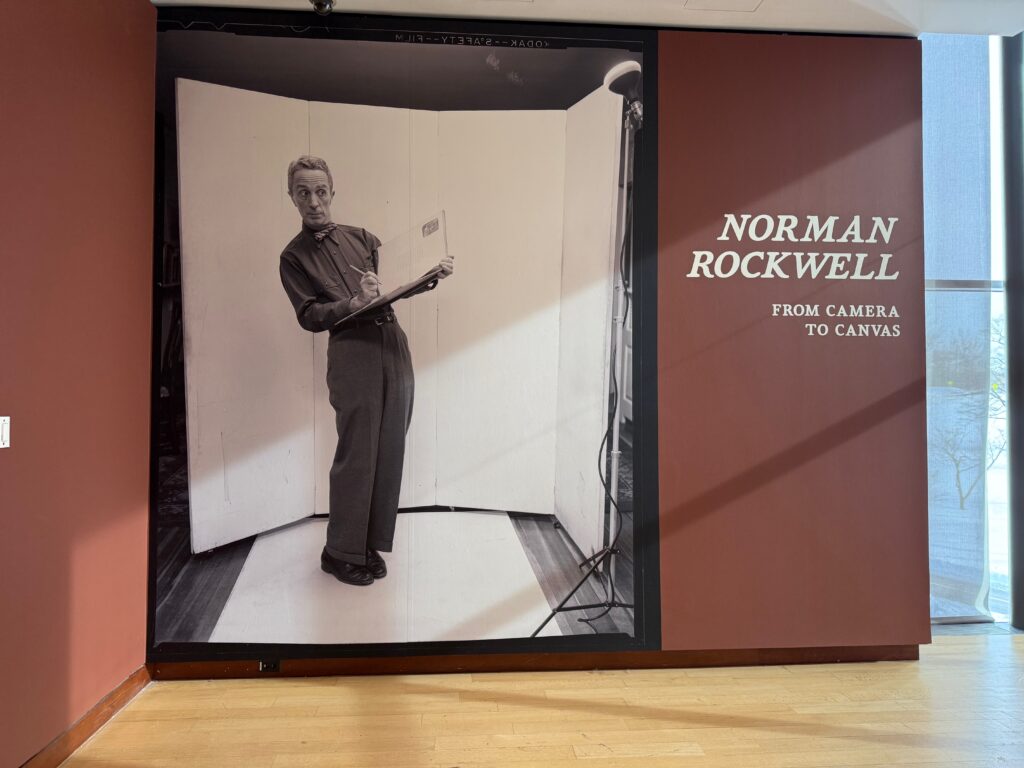
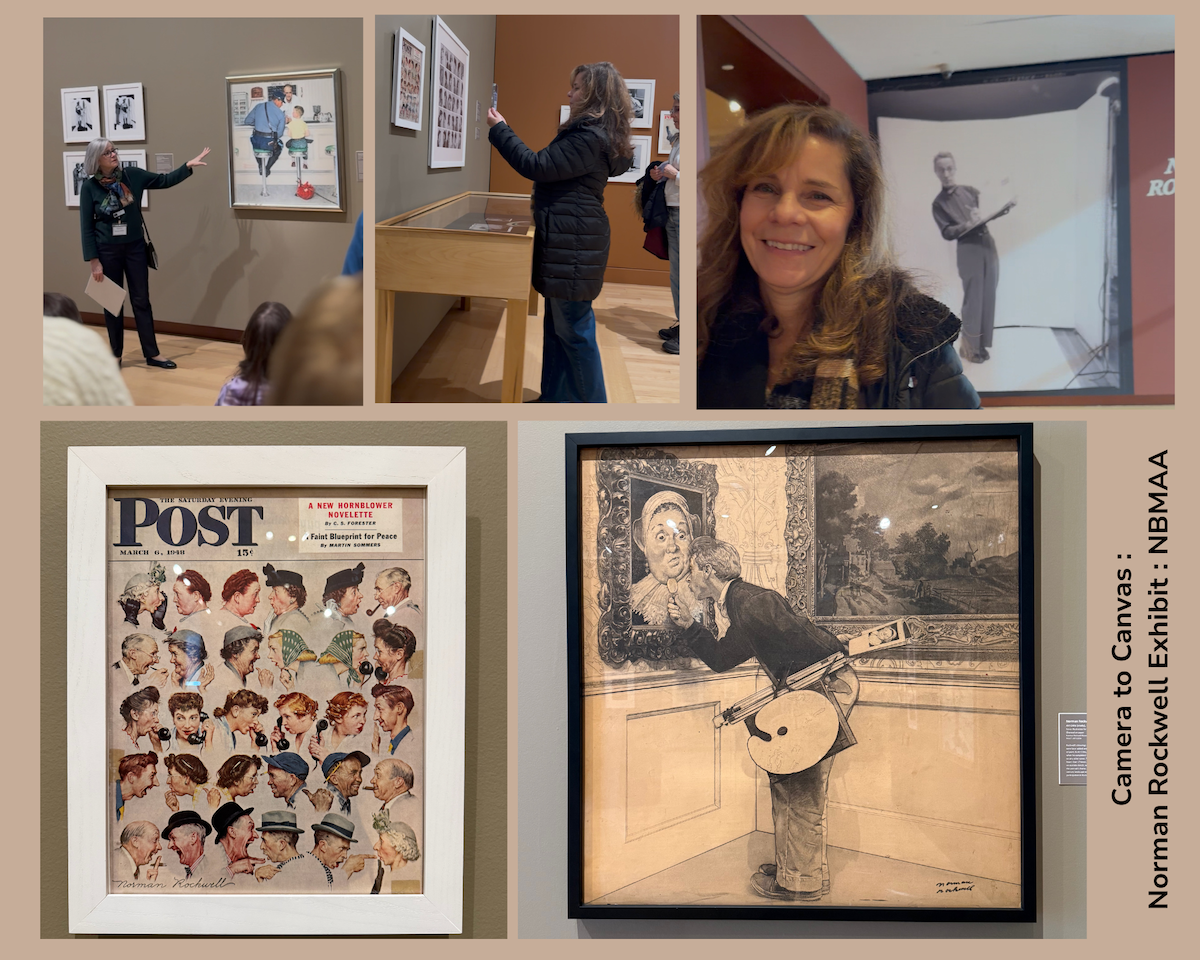
This past weekend, my husband Dean and I visited New Britain Museum of American Art to see the Norman Rockwell exhibition From Camera to Canvas. Being back in that museum was especially meaningful—I worked in the education department there in 2007–2008, and it felt like returning to a familiar and formative place.
The exhibition offered a wonderful look into Norman Rockwell’s process. The docent beautifully explained how Rockwell worked from black-and-white reference photos, beginning with small thumbnail sketches, then developing larger drawings before ever touching the canvas. His final paintings—often around 45 x 45 inches—were carefully constructed narratives. Over the course of his career, he created more than 300 covers for the Saturday Evening Post, frequently using family members and neighbors as his models.
Seeing that process affirmed something I’ve always believed: strong storytelling in painting doesn’t happen by accident.
Building Balance in a Multi-Figure Painting
When I’m creating a wedding painting with many people, my primary focus during the event is always the couple—their pose, connection, and placement. That gives me the freedom back in the studio to thoughtfully build the rest of the composition.
I sketch multiple layout options, considering how people relate to one another naturally. Grandparents may be seated at a table, parents grouped together watching proudly, friends placed in ways that feel organic rather than staged.
From a painter’s perspective, grouping can’t be random. If all the groomsmen are together in black suits, that creates a heavy block of dark value. If bridesmaids are grouped in matching dresses, a single color can overpower the painting. My job is to balance color, value, and movement so nothing distracts from the couple—the heart of the story.
This is careful, quiet work. It’s where experience matters.
A Finished Story, Ready to Be Lived With
The final painting of Adam and Molly captures not just their first dance, but the people and love surrounding them. Once framed and placed in their home, it becomes something they’ll live with—not just remember. They even shared a photo of where they hung the painting!
Why This Matters to Me
Norman Rockwell was a master storyteller. That is what I aspire to as well—not by copying his style, but by honoring his approach: patience, preparation, and respect for the story being told.
Live wedding painting, for me, isn’t about speed or spectacle. It’s about observing life as it unfolds, capturing it honestly, and finishing it with care so it can be treasured for generations.
That is the work. And it’s a joy every time.
