



When I first started creating art again after taking several years off to raise our children, I spent a lot of time listening to artist interviews. Back then it was Blog Talk Radio, and one comment seemed to come up over and over again:
“I don’t like doing commissions.”
That stuck with me.
I remember thinking, They must know something I don’t. Maybe commissions really are frustrating.
Well, after completing well over 250 commissioned paintings during the past fifteen years, I can honestly say…they were right.
Commissions are hard.
But they’re also one of the greatest blessings of my career.
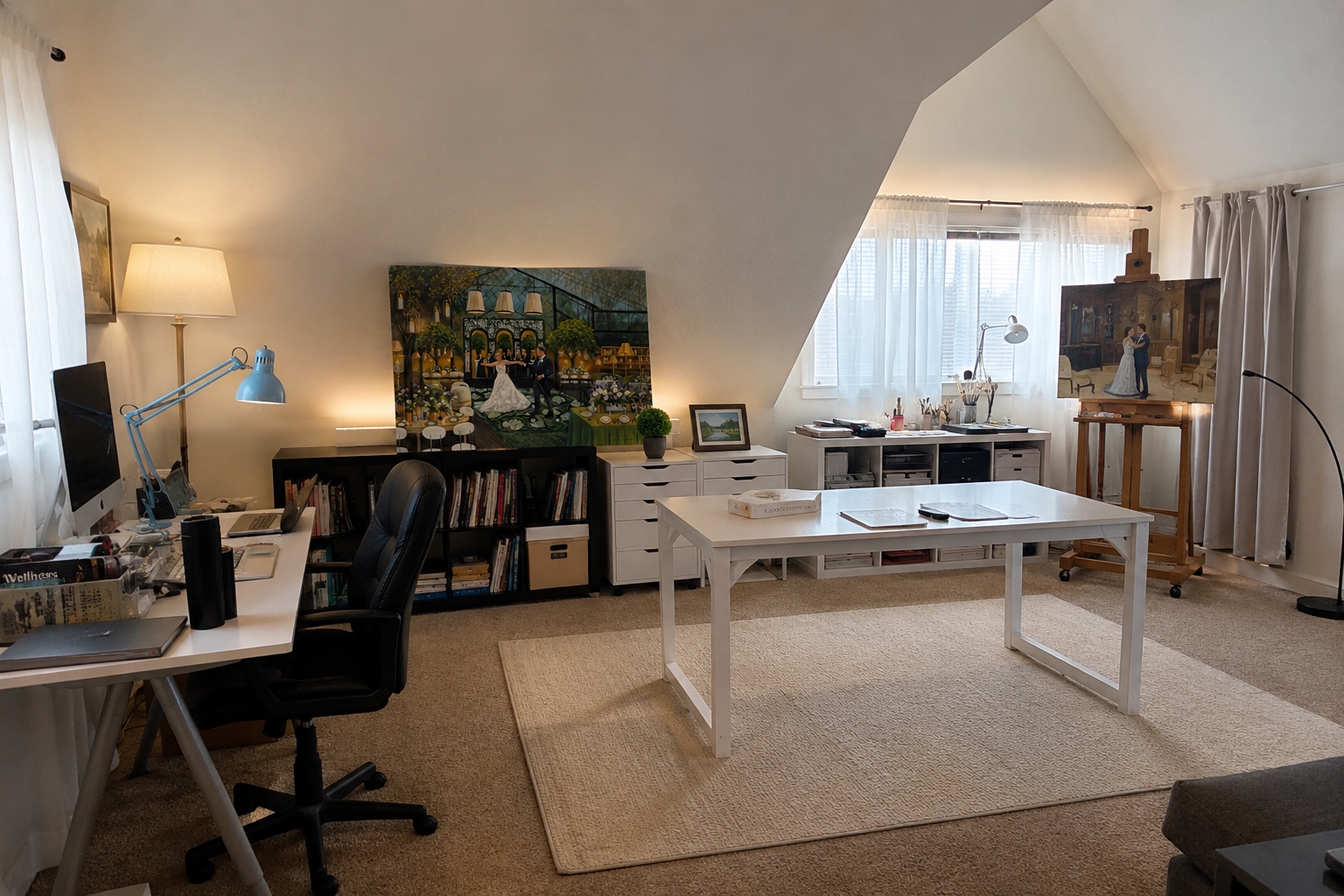
As I write this, I have six unfinished commissioned paintings in my studio and more already scheduled over the next eighteen months. Some days that feels overwhelming. Most days it feels like an incredible gift.
Those commissions have paid our bills, allowed me to stay home while raising my family, and given me a level of financial stability that many artists never experience. For any creative entrepreneur, that stability is something not to take for granted.
I also look forward to creating more original work again someday. These days I satisfy that creative desire with small watercolor sketches simply because they make me happy. I don’t even create them with the intention of selling them. Sometimes it’s enough just to create for the joy of creating.
Looking back, here are a few lessons I’ve learned along the way.
1. I find it easier to market commissions than my original artwork.
This one surprised me.
I’ve never loved social media, especially when it feels like I’m saying, “Look what I made.”
Oddly enough, I’m much more comfortable saying, “Here’s what I created for this wonderful couple,” or “Here’s the painting this family commissioned.”
Maybe it’s because I’m telling someone else’s story instead of promoting myself.
It’s probably a mindset I’ll continue working on, but for now I’ve learned to lean into what feels authentic rather than forcing something that doesn’t.
2. Find your niche.
I’ve painted house portraits, pet portraits, murals, figurative paintings, landscapes, and just about every type of commission you can imagine.
I’m glad I tried them all.
Early on, experimenting helps you discover what you truly enjoy doing.
Eventually, though, you begin to notice where your passion meets demand.
For me, that became live wedding painting.
Every wedding presents new challenges, so it certainly isn’t easy. But capturing one of the happiest days of someone’s life is deeply rewarding, and I still feel grateful every time a couple chooses me.
3. Learning to communicate with clients is a skill.
Like painting, client communication improves with practice.
I remember my first phone calls. I had a list of questions in front of me and awkwardly stumbled through every conversation.
Honestly, I still feel a little awkward sometimes.
I’ve realized that’s okay.
I don’t think I’ll ever sound perfectly polished, and I don’t think I want to. Especially now, when so much communication feels automated, being genuine is actually a strength.
I’ve also learned not to take client feedback personally.
When someone asks for a change, I try to remember that this painting belongs to them. They’ve entrusted me with creating something meaningful for their family, and they deserve to be heard.
Here’s a little secret.
If I receive an email that stings a bit, I often paste it into ChatGPT before responding. Not because I want AI to write my emails, but because it helps remove the emotion from my first reaction. It gives me space to respond thoughtfully instead of defensively.
That simple habit has helped me handle difficult situations far more professionally.
4. Build systems before you think you need them.
My first year creating commissions, I completed seven paintings.
That was manageable.
The following year I completed thirty-seven.
That’s when I realized I couldn’t keep everything in my head anymore.
Over the years I’ve tried several client management systems, and today I use Bloom. It keeps contracts, invoices, questionnaires, reference photos, notes, deadlines, and galleries together in one place.
Having a reliable system removes so much mental clutter and lets me focus on painting instead of searching for information.
I’ll share more about my workflow in a future post.
5. Price your work so you can enjoy creating it.
This topic deserves an entire blog post on its own.
Early in my career I charged far too little.
Other artist friends warned me.
I didn’t listen.
Eventually I discovered something important: when you’re underpaid, it’s easy to begin resenting the work.
That isn’t good for you, and it certainly isn’t good for your clients.
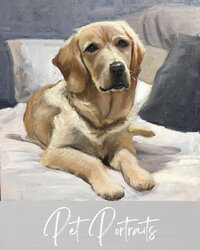
One example was pet portraits. I loved painting them, but I charged so little that every new inquiry felt overwhelming instead of exciting.
Looking back, I don’t think the problem was painting pets.
The problem was my pricing.
As my prices gradually increased to better reflect the time and skill involved, I learned that fair pricing benefits both the artist and the client.
6. Review every commission.
This is something I’ve only started doing within the past year, and I wish I’d begun much sooner.
After each painting, I spend a little time reflecting.
What went well?
What could I improve?
How was the communication?
Did my process work smoothly?
Would I handle anything differently next time?
These small reviews have helped me improve far more than I expected.
One suggestion, though…
If the project was especially stressful or the client was difficult, wait a few weeks before writing your notes.
Distance has a way of replacing emotion with perspective.
You’ll learn much more from the experience.
Final Thoughts
If you’re considering becoming a commissioned artist, don’t let the stories about difficult clients scare you away.
Yes, commissions can be challenging.
They ask you to become not only a better painter, but also a better communicator, business owner, problem solver, and professional.
Looking back, I wouldn’t trade that journey for anything.
It has shaped both the artist and the person I’ve become.
If you’re interested in live wedding painting or simply enjoy reading about the business of commissioned art, I’d love to have you follow along. In the future, I hope to offer mentoring for artists who are interested in building their own commission-based art business.
