



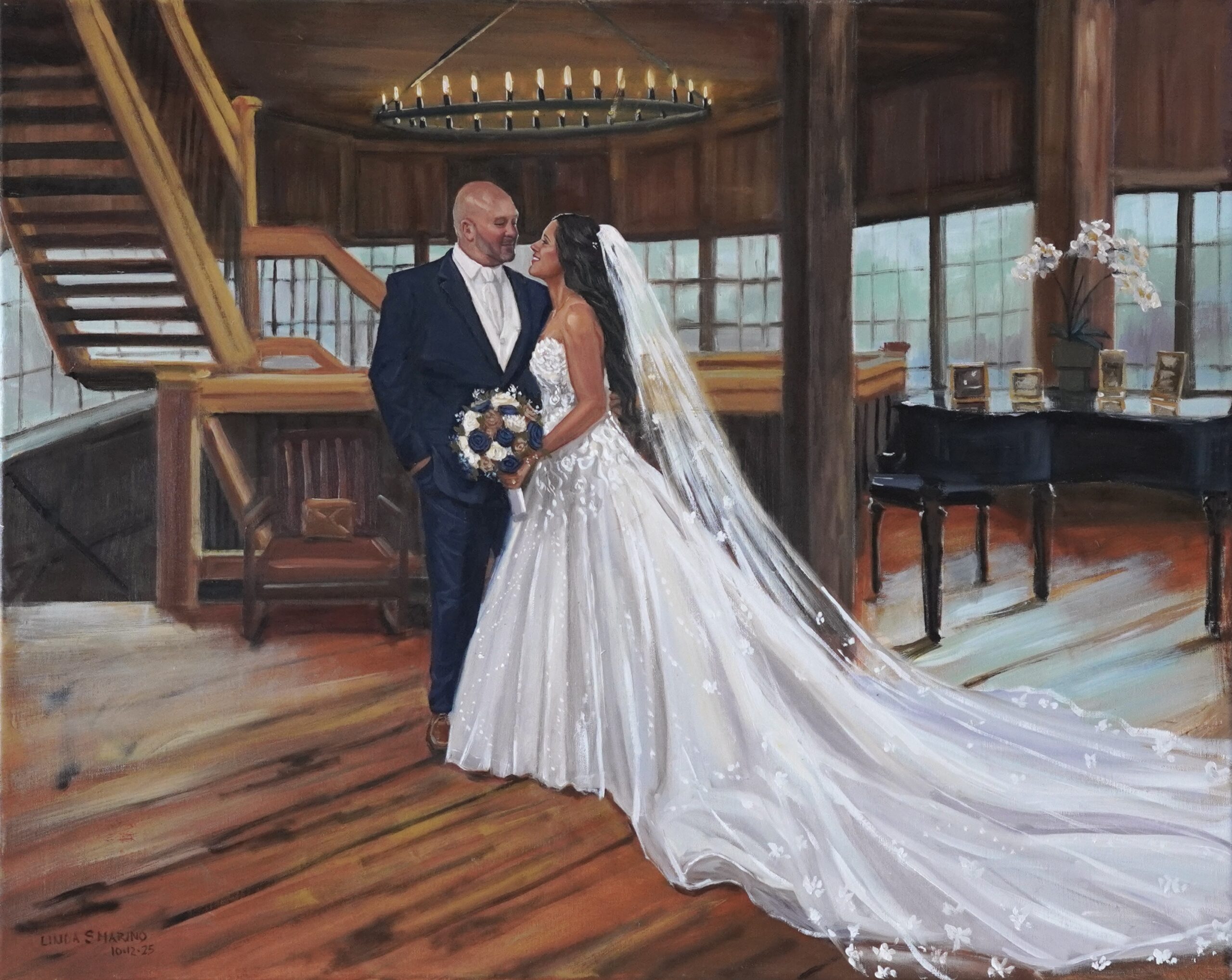
24 x 30″
Many Artists Use Square Grids… I Use This Instead
The Diagonal Grid Method for Live Painters
Many artists are familiar with the traditional square grid method for transferring a drawing from a reference image onto canvas. This method typically involves dividing a photo into evenly measured squares—often one inch—and then recreating a scaled version of those squares on the canvas.
It’s a reliable method and one that many artists learn early in their training.
When working in the studio, I sometimes use this approach myself. Taking the time to carefully measure and map out a grid can be extremely helpful when working on a detailed composition.
However, when painting live at weddings and events, time is much more limited.
Guests are arriving, music is playing, and the event is unfolding in real time. Measuring dozens of squares on a canvas simply isn’t practical when you need to begin painting quickly.
Over time, I developed a faster approach that allows me to establish an accurate drawing without all the measuring. I call it the Diagonal Grid Method, and it has become one of the most helpful tools in my live painting process.
Watch the Video Tutorial
If you’d like to see how I use this method, I created a short video demonstration showing the process on my phone and how I transfer the lines to the canvas.add video here
Why Accuracy Matters in Live Event Painting
When painting live at a wedding or event, one of the biggest challenges is quickly establishing the correct placement of figures, architecture, and important elements within the scene.
Even small inaccuracies in the early drawing stage can make the painting feel off-balance later.
The goal is to create a structure on the canvas that helps guide the drawing while still allowing the artist to work efficiently and confidently.
The diagonal grid method provides exactly that.
Step 1: Prepare Your Reference Image
The first step begins with your reference photo.
Open the image on your iPhone or iPad, tap Edit, and then select the Markup tool (the icon that looks like a circle with a pencil tip).
Turn on the ruler tool so you can draw straight lines across the image.

Step 2: Draw the Diagonal Structure
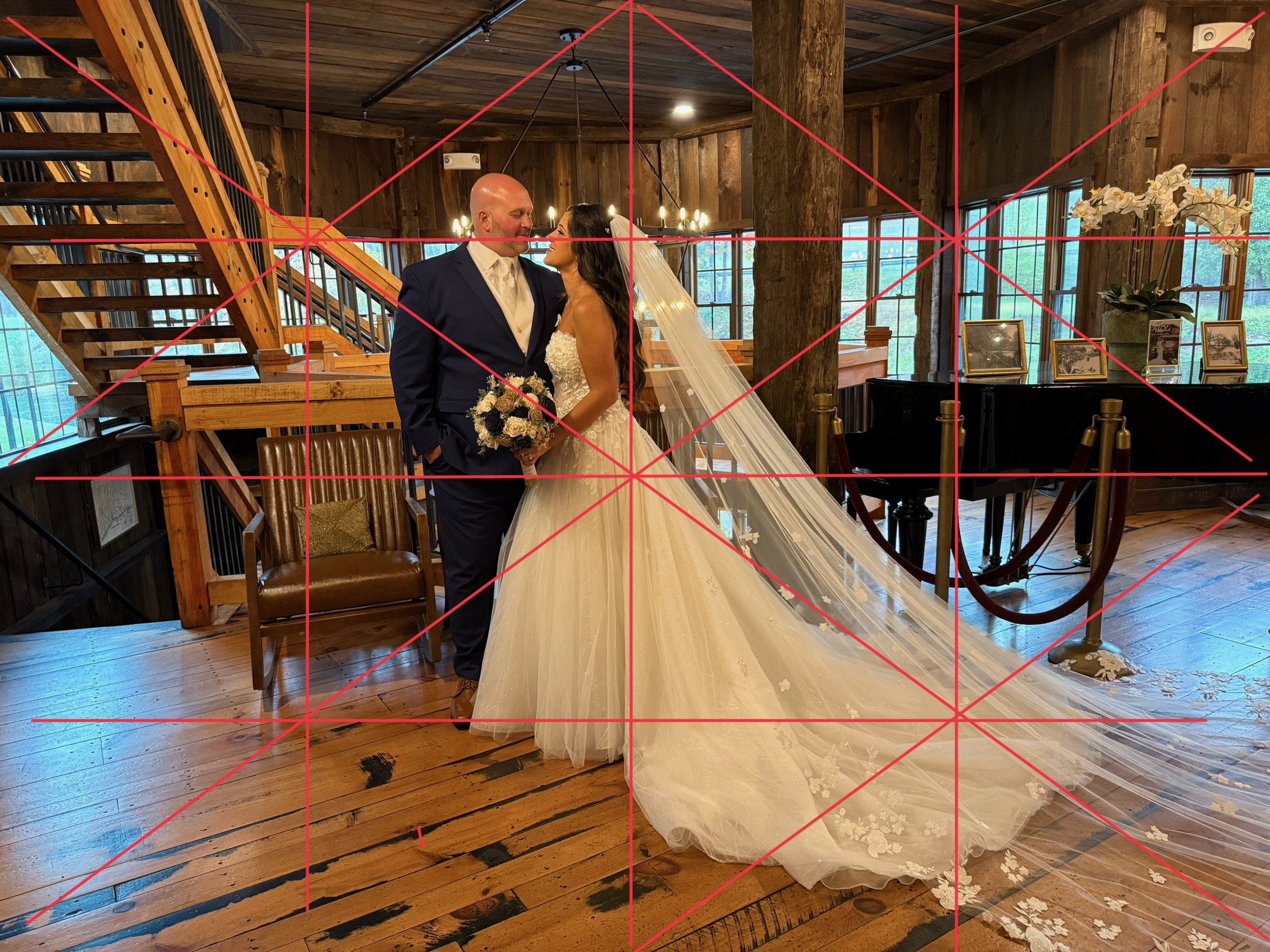
Using the ruler, draw a diagonal line from the bottom left corner to the top right corner of the image.
Next, draw a second diagonal line from the bottom right corner to the top left corner.
These two lines immediately establish the overall structure of the composition. They help you see how major elements align across the canvas and give you strong visual reference points.

Step 3: Add the Center Lines
Next, draw a vertical line through the center of the image.
Then draw a horizontal line through the center.
Now the image is divided into four main quadrants with diagonal guides crossing through the composition.
This combination of diagonal and center lines provides surprisingly strong visual anchors for placing figures and objects accurately.
Step 4: Subdivide Areas When Needed
If there is an area of the painting that contains more detail—such as figures, florals, or architectural elements—you can divide that quadrant further.
Simply add additional diagonal or center lines within that section.
This allows you to refine placement without needing to measure dozens of small squares.
Step 5: Repeat the Lines on Your Canvas
Once the grid is drawn on your reference image, quickly sketch the same diagonal and center lines onto your canvas.
Because the lines connect corner to corner and center to center, they can be drawn quickly without measuring tools.
Within a minute or two, you now have a structural guide that helps you accurately place the figures and major shapes in the composition.
From there, the drawing process becomes much easier.
Why This Method Works Well for Live Painters
For live event painting, the biggest advantage of this method is speed.
Instead of measuring and drawing a traditional square grid, you can establish the structure of your composition in just a few moments.
The diagonal grid method provides:
• A fast setup
• Clear compositional guides
• Accurate placement of figures and objects
• No measuring required
This allows you to spend less time preparing the canvas and more time focusing on the painting itself.
Bonus: Highlight video from live painting at Kristy and Tavis’ Wedding Day
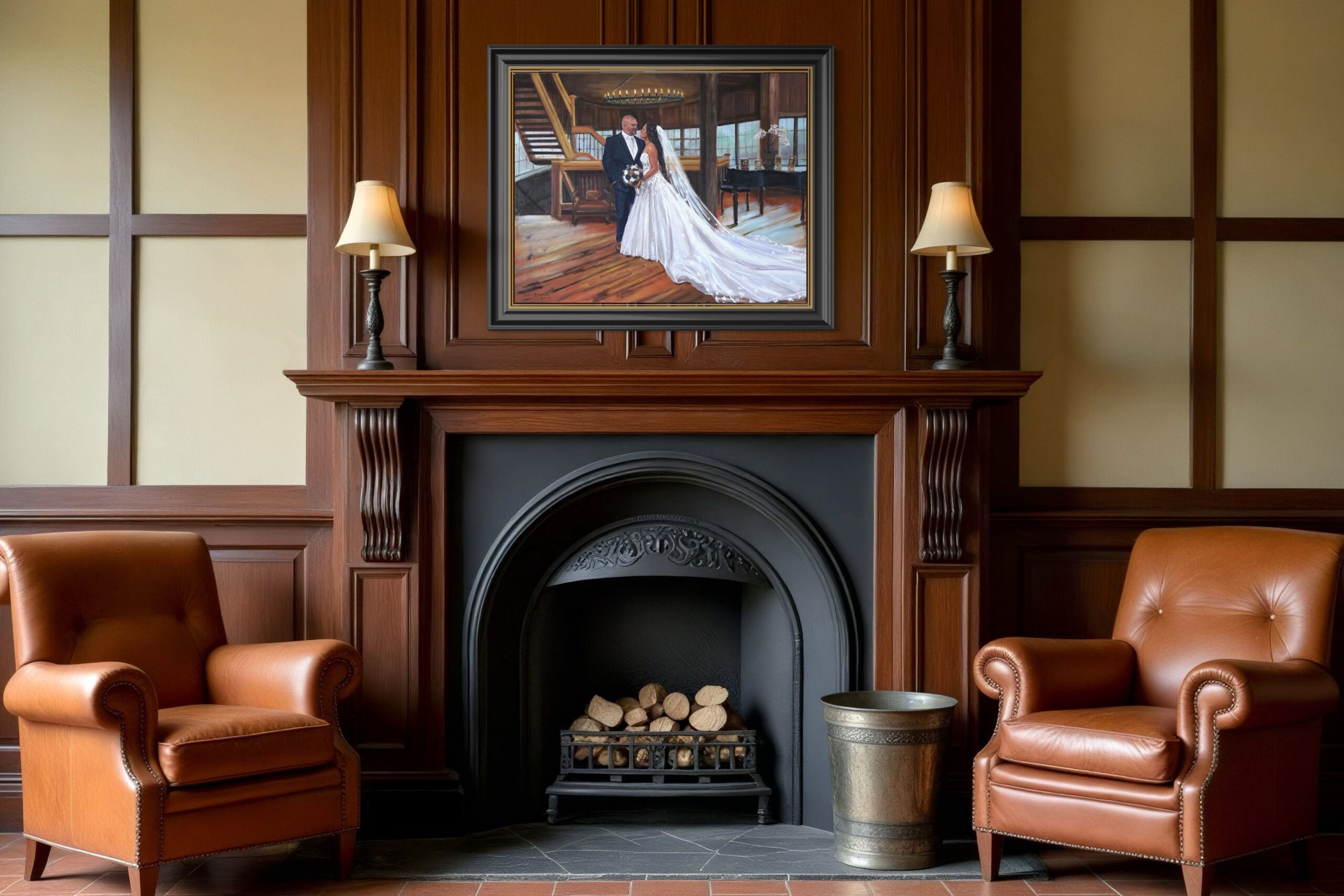
And the finished painting framed and hung in a mock up room 🙂
A Quick Question for Artists
Have you ever used a grid method in your painting process?
And if so, do you prefer the traditional square grid or something faster like the diagonal method?
Feel free to leave a comment below. I’m always happy to answer questions and share ideas with fellow artists.

Leave a Reply