
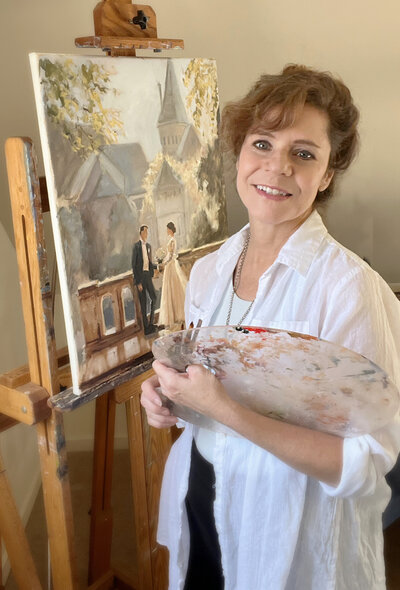




When Theresa first reached out to me, she had a clear vision: a live wedding painting that would be a surprise for her bride, Jessica. Over many thoughtful conversations and emails, we planned a scene that would feel personal, joyful, and filled with the atmosphere of their day. And on the wedding day at Fox Hollow in Woodbury, New York, Theresa pulled off the surprise flawlessly. Jessica’s reaction when she realized a painting was unfolding before her was priceless — and watching them both return throughout the evening to see the progress was a moment I’ll never forget.
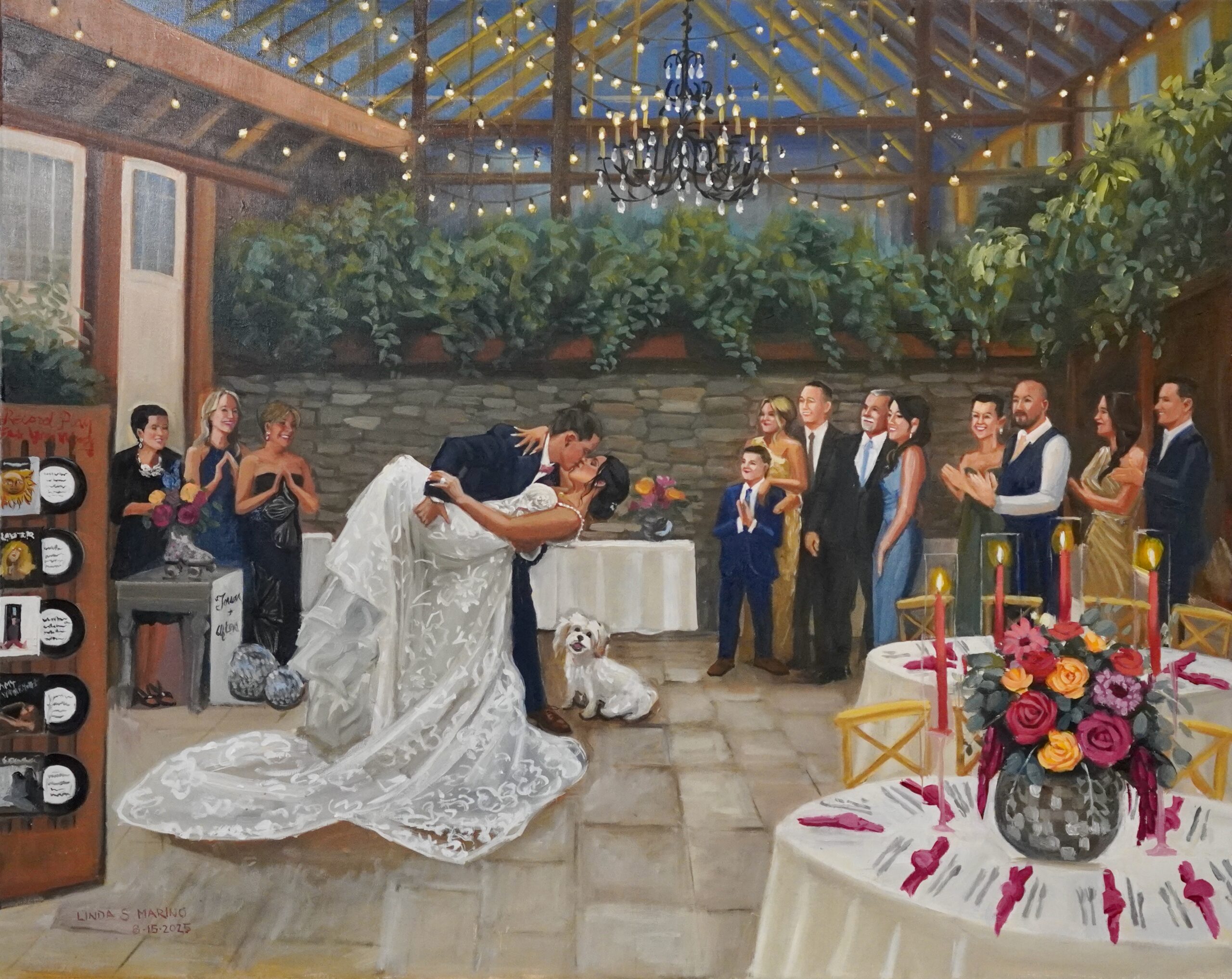
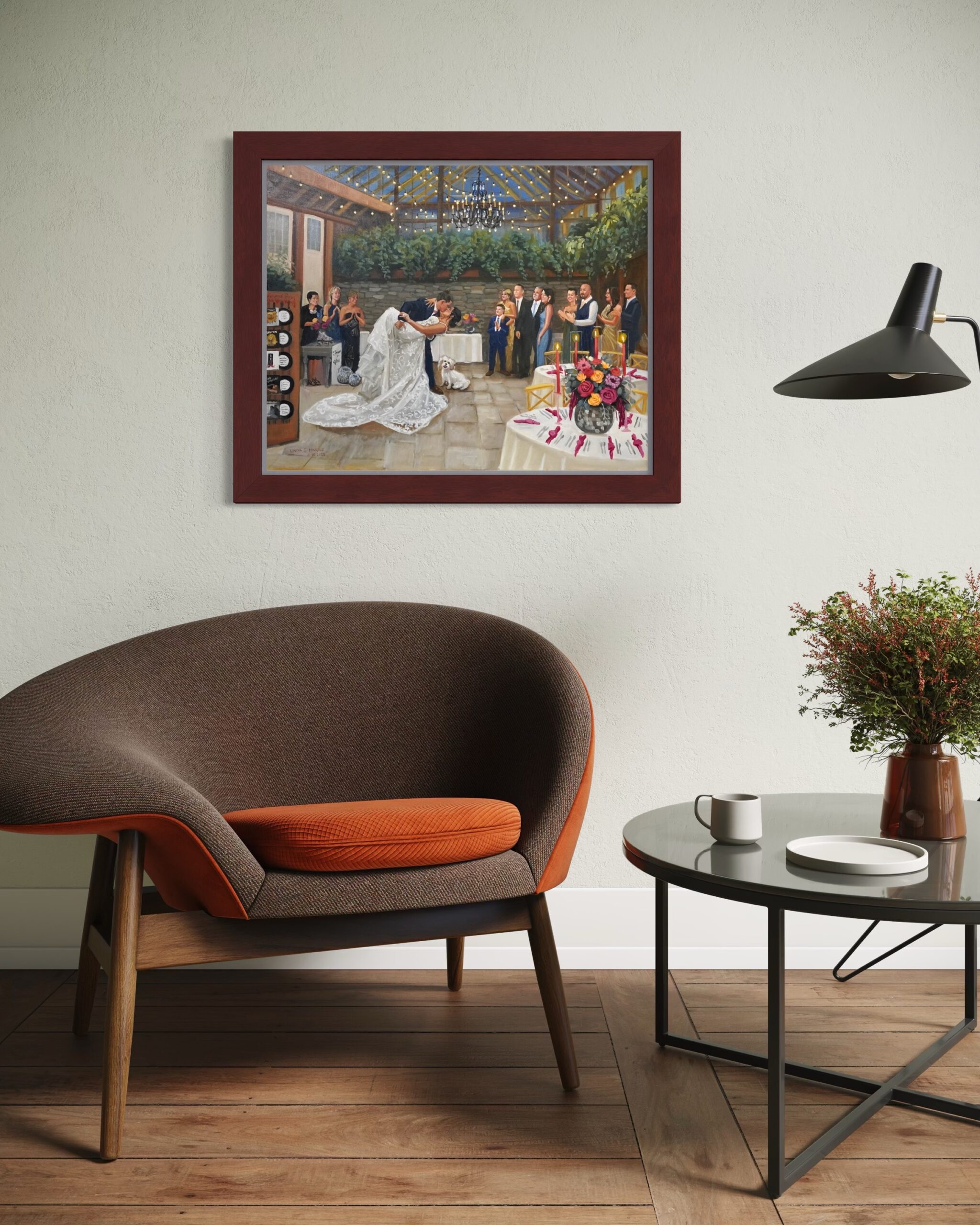
This painting captures their dip-kiss during the reception — surrounded by family, under glowing chandeliers and twinkle lights, framed by greenery, warm wood beams, colorful florals, and the personality of their decor. Jessica’s creative, out-of-the-box approach to styling the space made it a dream to paint. Color, texture, and thoughtful detail were everywhere.
But behind a painting like this is far more than what meets the eye.
For those curious about live wedding painting — especially fellow artists drawn to figurative, narrative, and scene-based work — I’d like to share a little of what happens behind the scenes.
Composing a Story in Real Time
A live wedding painting is not simply about painting what’s in front of you. It is about building a balanced composition while the event is still unfolding.
Before a single brushstroke, I am asking:
Where is the focal point?
How does the viewer’s eye travel through the scene?
What structural elements anchor the space?
Which details support the story — and which will distract from it?
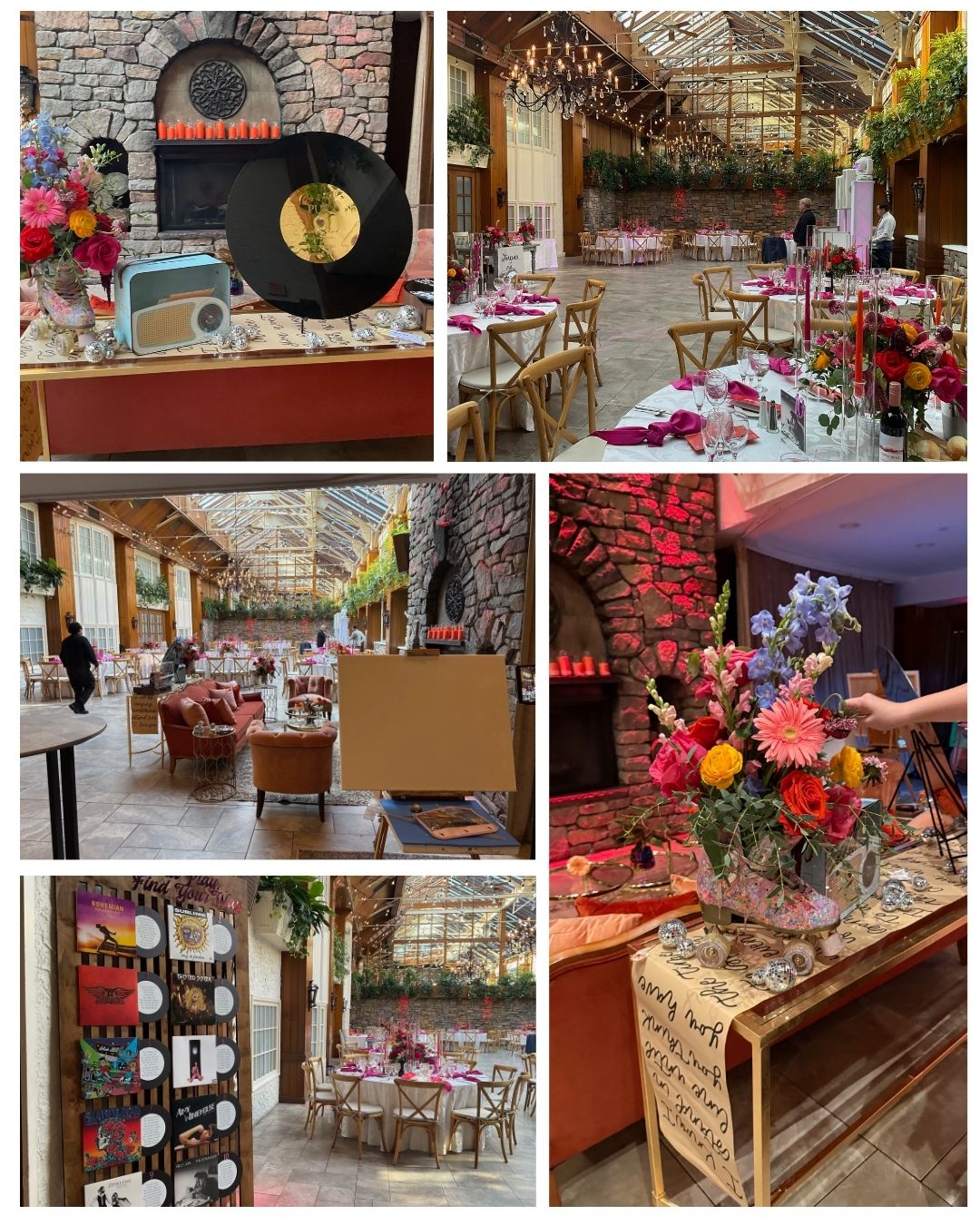
In this painting, the sweeping train of Theresa’s gown creates movement and leads the eye toward the couple. The line of guests frames the moment without overpowering it. The architecture of Fox Hollow — the beams, stone wall, and overhead lighting — gives the scene its sense of place. Greenery softens the structure. Pops of bold floral color echo the joy of the celebration.
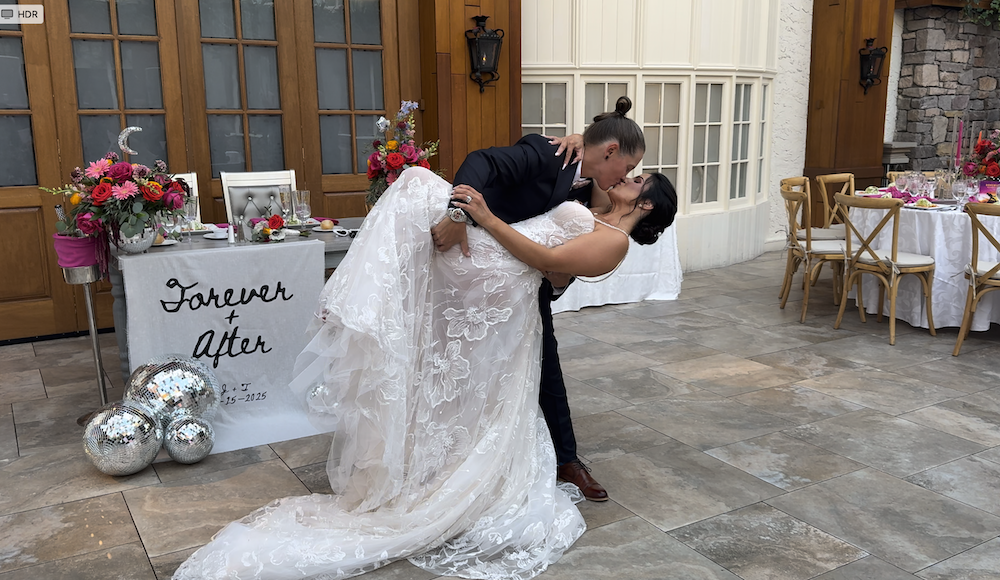
All of these decisions happen quickly on site, built on years of experience composing complex scenes.
Theresa also requested that immediate family be included in the background. Honoring a client’s wishes while still maintaining visual harmony is part of the art. Every figure added changes the rhythm of the composition. Every choice matters.
Holding Many Layers of Information
When painting live, you are holding multiple streams of information in your mind at once:
• The pose of the couple
• Likeness in faces and posture
• Architecture and perspective
• Lighting temperature and candle glow
• Color relationships across the room
• Decorative details that express personality
• Emotional energy of the moment
This continues not only during the live portion of the event, but into the final studio layers in oil, where refinement, depth, and subtle color adjustments bring everything together.
These skills take time to build. There are no shortcuts. Only repetition, observation, and practice.
Building an Observation Bank
One of the most valuable habits I’ve developed over the years is regular sketching. Faces. Figures. Hands. Table settings. Chandeliers. Floral arrangements. Interior spaces. Light fixtures. Drapery folds. Candle reflections.
I carry sketchbooks filled with studies — a visual library I can call upon when I’m on location. I often refer to this as building an observation bank.
When I encountered the candelabras and candlelight at this wedding, I didn’t need to invent how the reflections behave — I’ve studied them before. When arranging multiple figures in a believable space, I lean on years of gesture drawing and compositional sketches.
John Singer Sargent famously said, “Sketch everything.” I couldn’t agree more. There is no such thing as too much practice.
Experience Creates Freedom
For artists interested in live wedding painting, know this: the freedom to paint confidently in real time comes from preparation done long before the event. Sketching. Studying light. Training the eye. Understanding composition. Painting people in motion. Learning how to simplify chaos into clarity.
It is challenging work — and deeply rewarding.
To see a couple recognize themselves and their day within a painting created as the celebration unfolds is a rare privilege. And for those drawn to storytelling through paint, it is a path well worth pursuing with patience and dedication.
A Final Thought
Theresa and Jessica’s painting now stands as a keepsake of their day — not just a portrait, but a scene filled with atmosphere, personality, and memory. I’m grateful to have been part of their celebration and to share a glimpse of the process behind this work.
And to the artists reading: keep sketching. Keep observing. Keep studying scenes as they happen around you. One day, all those pages in your sketchbooks become the quiet foundation that allows you to build a painting — even as the story is still unfolding.
